Never sleep in these 3 positions if you have shoulder pain. Do THIS instead.

Are you tossing and turning at night because of relentless shoulder pain? Do you dread bedtime because you know your shoulder aches will keep you awake? You’re not alone! Shoulder pain is notorious for making sleep a nightmare, but the good news is there are proven ways to position yourself to not only get a good night’s rest but also promote faster healing for your sore shoulder.
Let’s break down the top techniques, straight from experienced physical therapists, so you can wake up feeling refreshed—not wrecked by pain. (Based on the insights of Bob Schrupp and Brad Heineck.)
Key Takeaways
- Proper sleeping positions can significantly relieve shoulder pain and help healing.
- The way you use pillows is key—support is everything!
- You can apply similar support techniques while sitting to protect your shoulder during the day too.
1. Side Sleeping? Create a Pillow “Canal”
Many people have a habit of sleeping on their side—even on the sore shoulder. The problem? This can place direct pressure on the injured area, pushing the shoulder joint out of its natural position. This pressure pinches tissues, impedes circulation, and lights up your pain receptors.
How to fix it:
- Instead of stacking up tons of pillows, use one or two strategically.
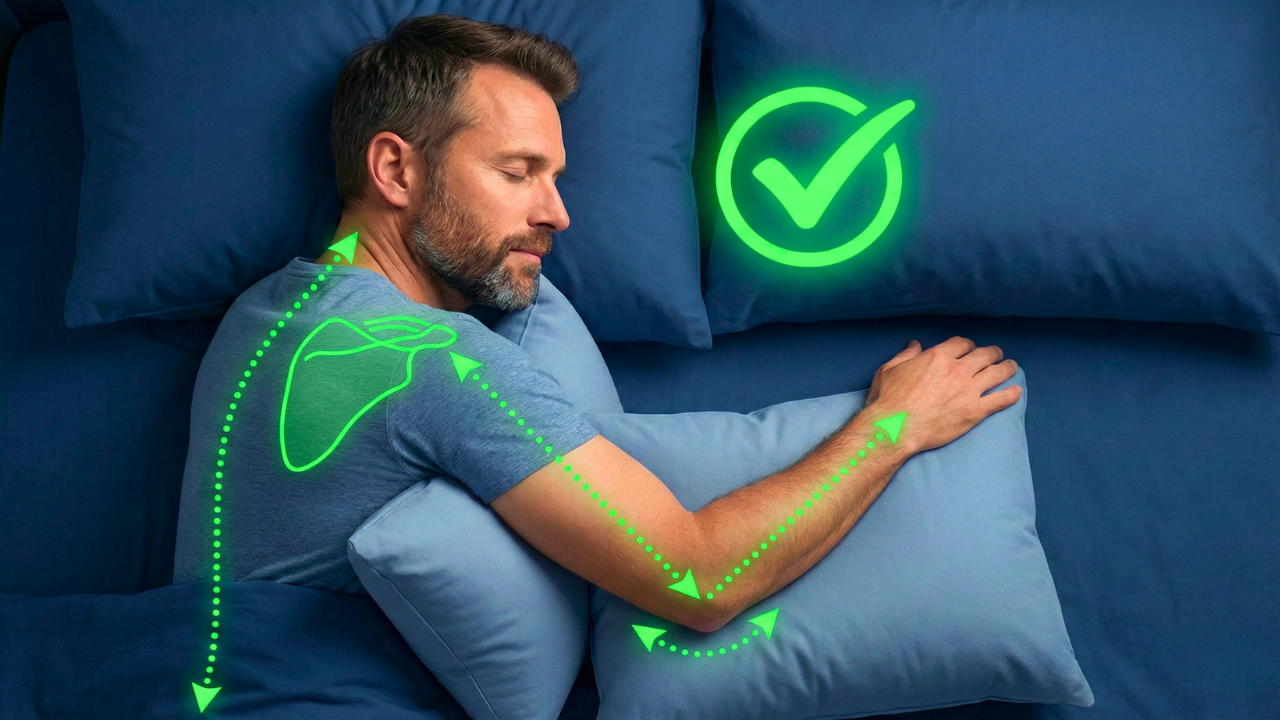
- Position a thin throw pillow (or your regular pillow) so it creates a gentle canal beneath your side and head.
- This shifts the pressure away from your shoulder joint and disperses your weight along your rib cage and upper back.
- For extra comfort, roll slightly back so you’re closer to lying flat. This further relieves pressure from your shoulder without forcing you to change sleeping sides entirely.
You’ll know instantly if you’re doing it right—comfort should be immediate!
2. Opposite Side? Double Up on Pillows to Neutralize the Arm
Sleeping on the opposite (uninjured) side seems like a natural choice, but here’s a hidden trap: Most people let their sore arm cross in front or internally rotate (think of your arm slumping forward across your chest or resting on a pillow).
This “closes” the shoulder angle and can mimic the very movements that cause impingement and make pain worse—especially after an hour or two of sleep.
How to fix it:
- Use two pillows: put one under your injured arm’s armpit and the other supporting the arm itself.
- This puts your hovering arm in a “neutral” position, with the elbow slightly bent and supported so it doesn’t drag downward or rotate inward.
- Prevents stress from building up on the shoulder and keeps painful tweaks at bay.
Experiment with pillow thickness and arrangement—you’ll feel immediate relief when you’re supported properly!
3. Avoid Sleeping on Your Stomach With Arms Overhead
Chances are if you’re a stomach sleeper with arms thrown above your head (or even behind your pillow), you’re waking up with major shoulder pain.
Here’s why: Sleeping face-down with arms overhead pulls your shoulders into extreme rotation and compression. Over time, this just aggravates inflamed tissues. Even back sleepers with arms overhead can face similar issues!
How to fix it:
- Ditch the stomach sleeping position entirely.
- If you’re on your back, make sure your arms rest by your sides or gently supported by a pillow under the arm of the sore shoulder.
- Usually, one pillow is sufficient to support that arm and keep your shoulder from dropping backward or rolling forward. Adjust for comfort—your body will tell you what works!
Bonus: Apply the Pillow Trick During the Day Too
Did you know sitting for long periods—like at your computer or in your favorite recliner—can also strain a painful shoulder?
When your arm hangs down unsupported, it drags your shoulder blade (scapula) out of alignment. That puts extra stress on the muscles that stabilize your shoulder—and before you know it, you’re in pain.
How to fix it:
- Use pillows to prop up the arm of your injured shoulder when sitting in chairs (especially if the armrests are too low).
- With computer chairs, adjust the armrests as high as needed or supplement with a folded-up pillow.
- In recliners or sofas, rest a pillow under your arm or across your lap and let your hand or elbow nestle into it. The key is full support—the weight of your arm should be completely off the shoulder joint!
This extra support relieves tension on shoulder muscles and the joint itself, letting your tissues recover throughout the day—not just at night.
Conclusion
Sleep shouldn’t be a battleground! With a simple pillow strategy and smart positioning, you can finally wake up rested and help your shoulder heal faster. Remember:
- Never sleep directly on the sore shoulder without support.
- Double up on pillows if sleeping on the opposite side to keep your arm neutral.
- Avoid stomach sleeping and arms overhead—you’ll thank yourself later!
- Don’t forget to support your arm during the day while sitting, too.
Try out these tips tonight—chances are you’ll notice a huge difference right away. Sweet dreams and speedy recovery to your shoulder!

News in the same category


What Happens to Your Body When You Eat Canned Tuna Every Day

17 Warning Signs Your Liver Is Crying for Help

How to Support Your Kidneys Naturally Using 1 Teaspoon of Baking Soda

Fish oil cuts CV risk nearly in half for dialysis patients

The hidden heart danger doctors say is more common in people with diabetes

The surprising power of 4 seeds to repair your nerves naturally

Trial: mRNA Flu Vaccines More Effective Than Quad

3 Miracle Herbs to Instantly Lower Blood Pressure & Clear Arteries Naturally

The Surprising Uses of Lemon and Charcoal: A Natural Mix That May Change Your Daily Routine

The Green Bell Pepper Hair Growth Secret You NEED to Know

Eating eggs every day can help you live longer

3 Miracle Herbs to Instantly Lower Blood Pressure & Clear Arteries Naturally

What is its effect. do you know?

Stop Ignoring These 8 Subtle Signs of Heart Trouble Before It’s Too Late

This Common Kitchen Herb Could Transform Your Eye Health

Take THIS Before Bed to Melt Away Stubborn Belly Fat While You Sleep

Water Fasting: Benefits, Risks, and How to Practice It Safely

Understanding Prostate Cancer: Early Signs, Major Risks, and Prevention Strategies
News Post

🥚 A Look at How Certain Boiled Egg Habits May Affect Your Heart Health

Small Steps, Big Impact: How 4,000 Steps a Day Can Transform Your Health

🌿 Clove Water Sitz Baths for Women: A Gentle Guide to Hygiene and Comfort

What Happens to Your Body When You Eat Canned Tuna Every Day

17 Warning Signs Your Liver Is Crying for Help

How to Support Your Kidneys Naturally Using 1 Teaspoon of Baking Soda

Fish oil cuts CV risk nearly in half for dialysis patients

The hidden heart danger doctors say is more common in people with diabetes

The surprising power of 4 seeds to repair your nerves naturally

Trial: mRNA Flu Vaccines More Effective Than Quad

3 Miracle Herbs to Instantly Lower Blood Pressure & Clear Arteries Naturally

The Surprising Uses of Lemon and Charcoal: A Natural Mix That May Change Your Daily Routine

The Green Bell Pepper Hair Growth Secret You NEED to Know

Rising Concerns Over Excessive Headlight Brightness: A Growing Challenge for Nighttime Driving Safety in the UK

Unwavering Loyalty: The Stray Dog's Final Journey of Love and Devotion

Clean Your Kidneys, Intestines & Liver in Just 3 Days: A Simple, Powerful Natural Detox Drink

You’re doing it all wrong. Here’s the right way to fix bare lawn patches in just 3 minutes (my nana’s zero-effort trick!)

Revolutionary MRI-Guided Cryoablation Offers Non-Invasive Cancer and Pain Treatment in Sydney

You're Doing It All Wrong. Here’s the Right Way to Store Leftovers (Expert-Approved Guide)