25 Remarkable Benefits of Guava Leaves and How to Use Them Safely
Health 16/12/2025 00:48
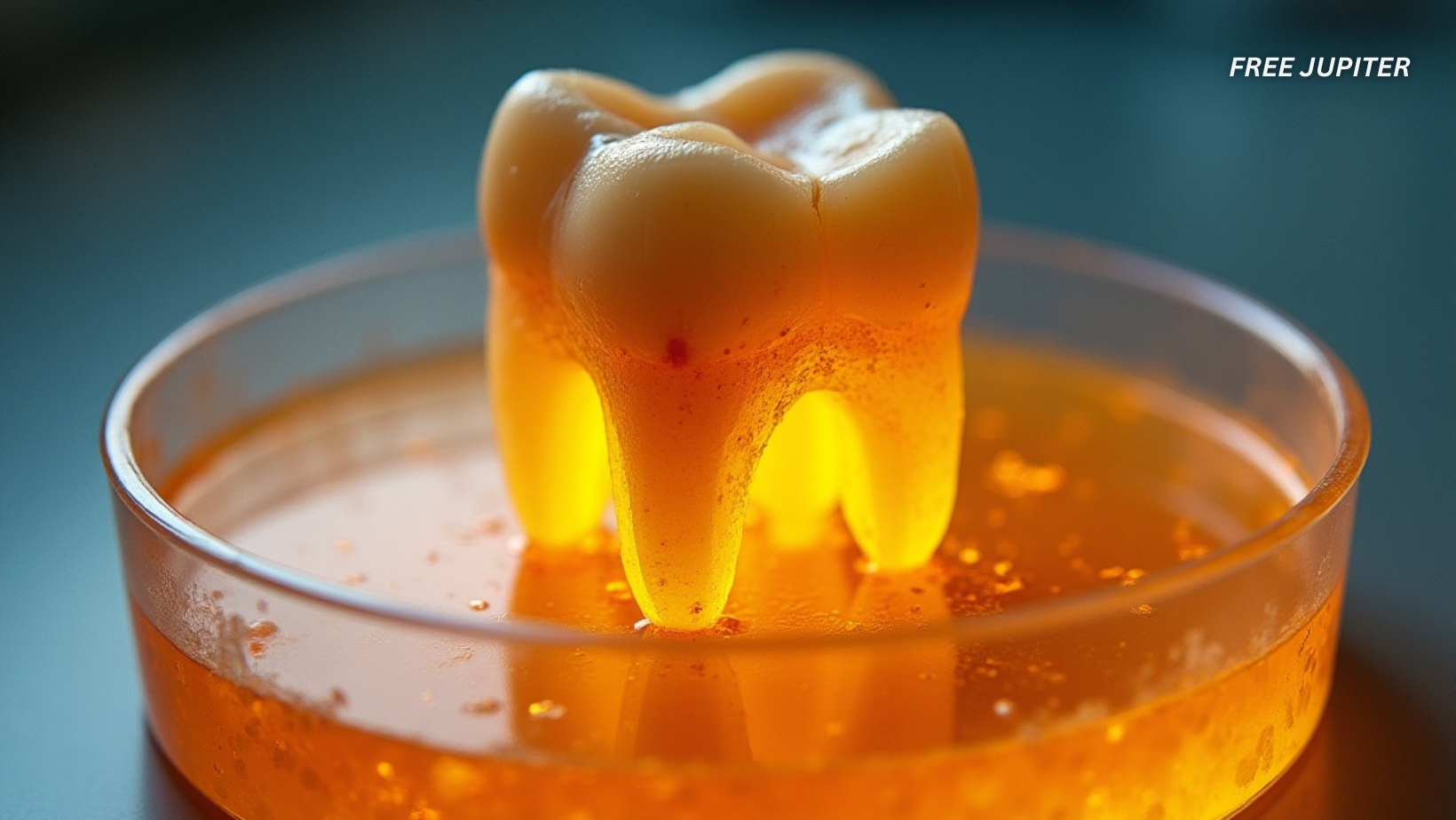
If you’ve ever had a cavity filled, undergone a root canal, or received a dental implant, you know the pain—both literal and financial—that modern dental care can bring. Now, imagine a world where instead of patching damaged teeth with artificial materials, your body could simply grow a new one. It sounds like a sci-fi fantasy, right?
Surprisingly, this futuristic vision may not be as far off as we once thought. Researchers at King’s College London have made a remarkable breakthrough: they’ve grown tooth-like structures from living cells in a lab. This isn’t a cartoonish experiment—it’s real science, biologically sound, and over a decade in the making.
🧪 The Breakthrough: Growing Teeth from Scratch
In an innovative study, scientists created miniature tooth structures—known as organoids—by combining two types of cells taken from mouse embryos and nurturing them in a specially designed, gel-like material called a hydrogel.
Hydrogels may sound like something out of a skincare routine, but in scientific terms, they are soft, water-absorbent substances that support living cells—imagine a sponge crossed with a cushion. These bioengineered hydrogels mimic the natural environment of the human body, creating the perfect incubator for tooth formation.
What made this hydrogel truly groundbreaking is that it was bioorthogonally cross-linked. In simpler terms, it was chemically programmed to guide the cells methodically toward becoming teeth, without rushing the process. Timing was critical—like letting dough rise naturally instead of microwaving it—you want biology to follow its own rhythm.
🔄 Why Humans Can’t Regrow Teeth (Yet)
Humans are generally stuck with just one set of replacement teeth. Once baby teeth fall out and adult teeth come in, that’s it. Lose a tooth as an adult, and your options are limited: dentures, bridges, or implants.
The animal kingdom, however, is far luckier. Sharks regenerate teeth continuously, sometimes cycling through over 20,000 in a lifetime. Elephants grow six sets of molars over their lives. The secret lies in certain stem cells and genetic triggers that humans lose as they reach adulthood. Recreating the right environment in the lab might one day awaken this dormant potential in us.
🧬 How Did Scientists Make It Work?
The researchers followed a precise recipe:
Mesenchymal cells, which form bone and connective tissue
Epithelial cells, which line surfaces like gums and skin
A carefully designed hydrogel that releases biological “instructions” gradually, telling cells how to form tooth tissue
Placed together in this matrix, the cells self-organized into a 3D structure that mirrored early tooth development stages. These were not shapeless blobs—they exhibited layers and patterns strikingly similar to a developing tooth.
Previous attempts failed because cells were overwhelmed by signals sent too quickly. This time, the hydrogel ensured everything progressed at a natural pace, allowing development to unfold slowly and deliberately, just as it would in the body.
🦷 Implications for Dentistry
We’re still a few steps away from putting lab-grown teeth into human mouths, but the possibilities are staggering:
✅ Natural Integration – Unlike implants made of titanium or ceramic, lab-grown teeth could potentially fuse with your jawbone, functioning just like natural teeth.
✅ Long-Term Durability – Traditional fillings and crowns wear out over time. A bioengineered tooth grown from your own cells could last as long as nature intended.
✅ Preventing Bone Loss – Tooth loss often leads to jawbone degradation. Growing a real tooth could help preserve bone density, a benefit implants don’t always provide.
🧭 Two Paths to Real-Life Application
Researchers are exploring two approaches:
Grow-then-implant: Cultivate a complete tooth in the lab and then surgically implant it.
In-body growth: Implant early-stage cells directly into the jaw, letting the tooth develop naturally inside the body.
Lab-grown teeth allow precise control, while in-body growth could integrate better with nerves, blood vessels, and surrounding tissue.
🚧 Challenges Ahead
Not everything is ready yet:
Scaling up: Mouse cells are simpler than human cells; replicating the process in humans will be more complex.
Safety testing: Ensuring lab-grown teeth don’t trigger immune responses or abnormal growths is essential.
Regulations: Bringing this to the public requires rigorous medical approvals and years of testing.
Despite these hurdles, excitement in the scientific community is palpable.
🔍 Broader Context: Regenerative Medicine
This breakthrough is part of a larger movement in regenerative medicine—helping the body repair or regrow its own tissues. Related innovations include:
3D-printed organs: Liver tissue, kidneys, and rudimentary hearts for research
Stem cell therapy for enamel repair: Early trials aim to rebuild worn-down tooth surfaces
Hair follicle regrowth using similar gels
Bioengineered gums and jawbone scaffolds
In essence, the tooth-growing project is part of a much broader effort to replace synthetic interventions with biological solutions.
🪥 The Bottom Line
Lab-grown teeth might sound like science fiction, but it’s becoming science fact. After years of experimentation, scientists are finally learning to replicate the natural rhythm of tooth development.
We’re not ready to abandon fillings, crowns, or implants entirely—but one day, a dental visit could include something extraordinary: a replacement tooth grown from your own cells. And honestly, that’s a reason to smile.
Disclaimer: This article is for informational purposes only and is not medical advice. Consult a qualified healthcare professional before making any health-related decisions.