Don’ts After Meals and 4 Don’ts Before Bed for Better Health and Sleep
Health 01/04/2026 09:54
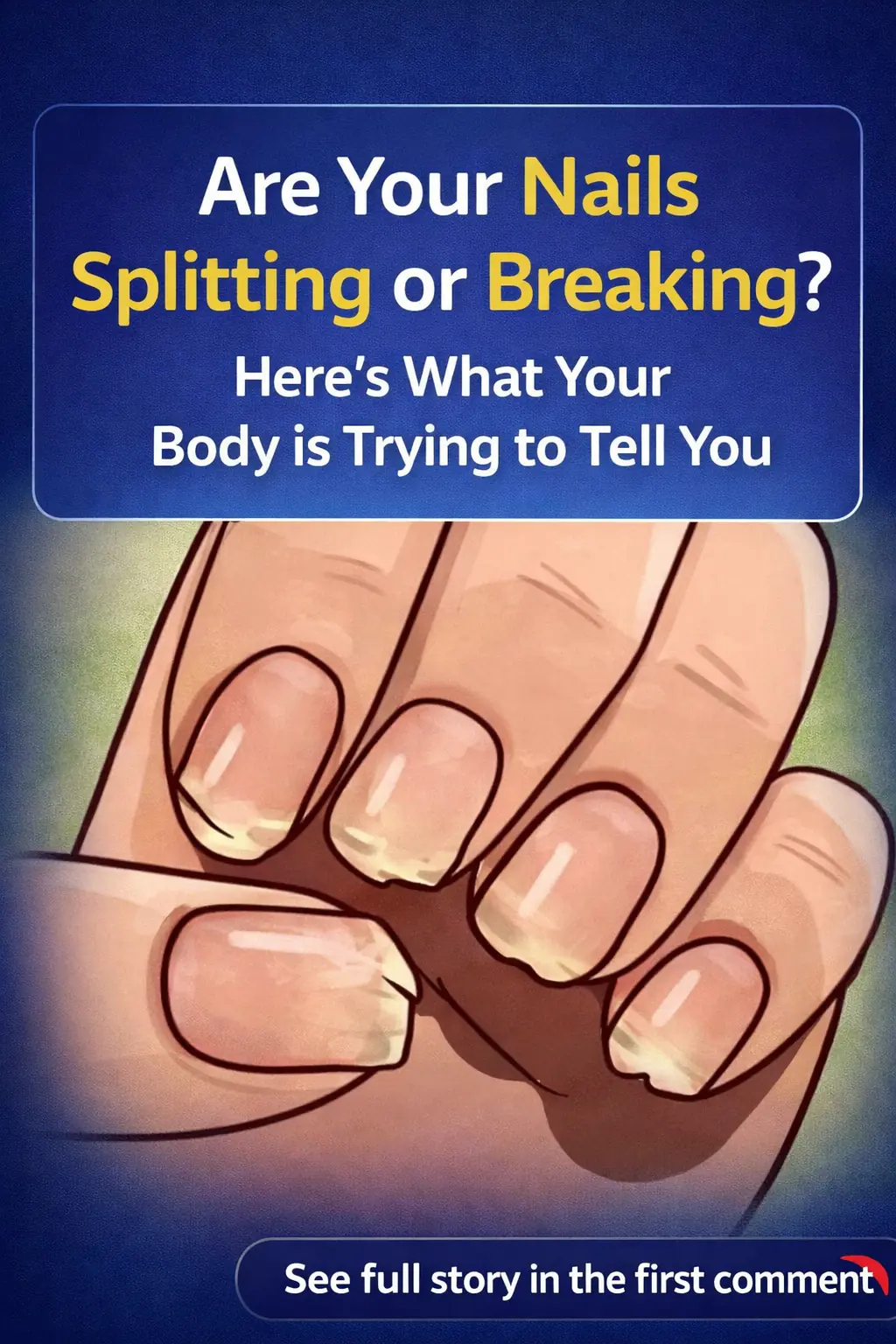
 What if something as simple as your nails could reveal serious health risks?Most people glance at their nails without a second thought. They trim them, paint them, or maybe notice when one breaks—but rarely do they stop to actually
observethem. Nails are often seen as purely cosmetic, a small and insignificant part of the body that has little to do with overall health.
But what if that assumption is wrong?
What if your nails are quietly sending signals—subtle warnings that something deeper is happening inside your body?
More Than Just Appearance
At first glance, nails seem simple. They grow, they harden, and they occasionally chip or peel. But beneath that simplicity lies a surprising truth: nails can act as early indicators of your internal health.
Changes in color, texture, thickness, or shape aren’t always random. In many cases, they reflect shifts happening beneath the surface—sometimes minor, sometimes more serious.
The problem is that most people don’t recognize these signs.
They assume it’s just aging. Or weather. Or maybe a bad manicure.
And while sometimes that’s true, not always.
The Subtle Signs You Might Be Ignoring
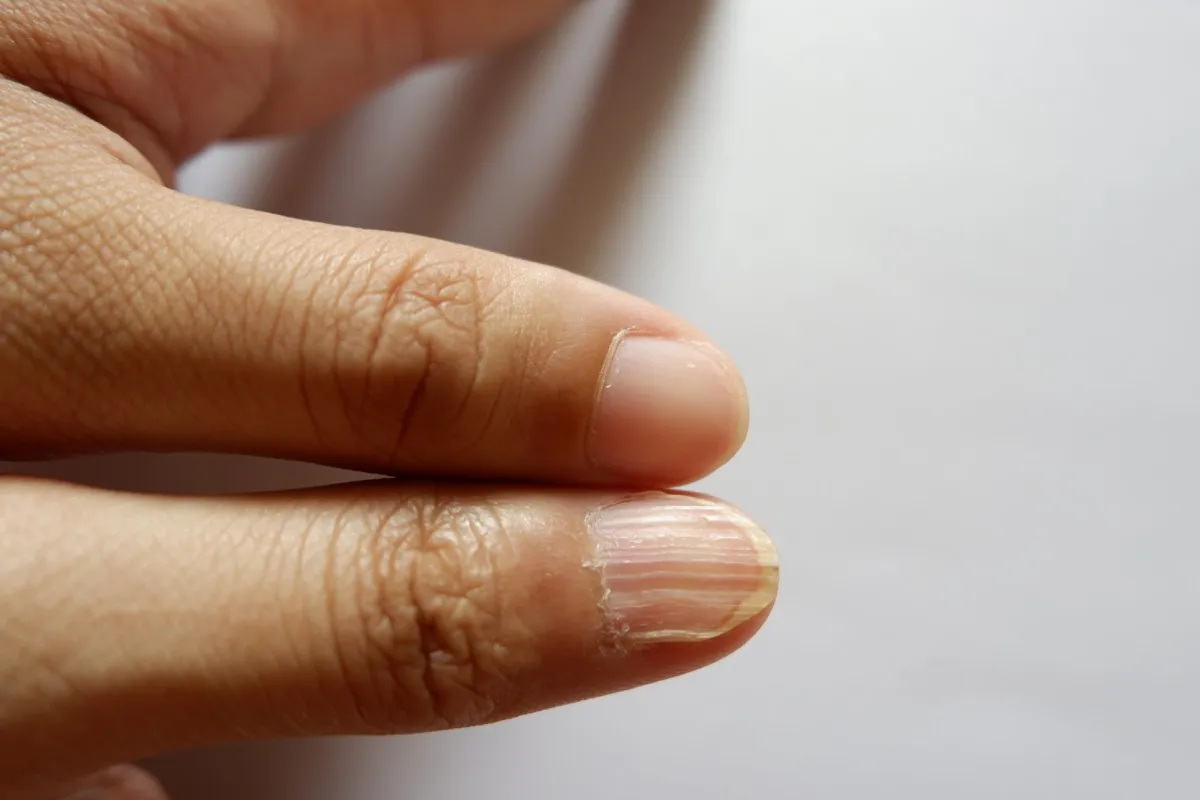
Have you ever noticed faint vertical lines running from the base to the tip of your nails?
These are often dismissed as a normal part of getting older—and in many cases, they are. But when they become more pronounced or suddenly appear, they may point to dehydration or a lack of essential nutrients.
Horizontal ridges, on the other hand, are more concerning. These lines can form when your body experiences physical stress, illness, or even a temporary disruption in nail growth. It’s as if your body hit “pause” for a moment—and your nails recorded it.
Then there’s brittleness.
If your nails crack, split, or peel easily, it might not just be from frequent hand washing or exposure to chemicals. It could be a sign that your body isn’t getting enough key nutrients like iron, biotin, or protein.
And what about discoloration?
Pale nails might suggest low iron levels. Yellowing can sometimes be linked to fungal infections—or in rarer cases, more systemic issues. A bluish tint could even indicate poor oxygen circulation.
Each of these changes might seem small on their own.
But together, they form a pattern—a quiet message your body is trying to send.
When It’s More Than Just Cosmetic
It’s easy to ignore nail changes because they don’t hurt. There’s no immediate discomfort, no urgent alarm.
That’s what makes them so dangerous to overlook.
Unlike pain, which demands attention, nail changes are passive. They sit there, visible but silent.
And that silence can delay action.
In some cases, nail abnormalities are linked to nutritional deficiencies. Your body may be lacking essential vitamins and minerals needed to maintain healthy tissue. Over time, this can affect not just your nails, but your energy levels, immune system, and overall well-being.
In other cases, the cause may be stress.
Chronic stress doesn’t just affect your mind—it impacts your body on a cellular level. Nail growth can slow down, become uneven, or show visible signs of disruption.
And then there are situations where nail changes may hint at deeper health conditions—issues related to circulation, metabolism, or long-term illness.
While not every nail irregularity signals something serious, the key is this:
You won’t know unless you pay attention.
The Timeline You Don’t See
Here’s what many people don’t realize: nails grow slowly.
This means any changes you see today may reflect something that happened weeks—or even months—ago.
In other words, your nails are like a delayed report.
By the time visible signs appear, your body may have already been dealing with an issue for a while.
That’s why ignoring these signals can be risky.
You’re not just overlooking a cosmetic change—you might be missing an early warning system.
Why Awareness Matters
Being aware of your nails doesn’t mean becoming paranoid or overanalyzing every small detail.
It means staying observant.
It means noticing when something changes—and asking why.
Do your nails suddenly feel weaker than usual?
Have new lines or ridges appeared?
Is there a color shift that wasn’t there before?
These questions don’t require medical expertise. They simply require attention.
And that attention can make a difference.
Because the earlier you recognize a potential issue, the easier it is to address.
A Simple Habit That Could Protect You
You don’t need complicated tools or expensive tests to start paying attention to your nails.
All it takes is a moment.
The next time you wash your hands, pause.
Look at your nails closely.
Not just a quick glance—but a real look.
Notice their texture. Their color. Their shape.
Ask yourself:
Is this normal for me?Because “normal” varies from person to person.
What matters is change.
Listening to What Your Body Is Saying
Your body communicates with you in many ways.
Sometimes through energy levels. Sometimes through appetite. Sometimes through pain.
And sometimes—through your nails.
They may not speak loudly.
They may not demand your attention.
But they are speaking.
The real question is:
Are you listening?
Because something as small as a line, a ridge, or a subtle color shift might be more than just a surface detail.
It might be your body’s way of saying:
“Pay attention. Something’s not quite right.”
And the sooner you notice, the better your chances of taking control—before small signs turn into bigger problems.
What if something as simple as your nails could reveal serious health risks?Most people glance at their nails without a second thought. They trim them, paint them, or maybe notice when one breaks—but rarely do they stop to actually
observethem. Nails are often seen as purely cosmetic, a small and insignificant part of the body that has little to do with overall health.
But what if that assumption is wrong?
What if your nails are quietly sending signals—subtle warnings that something deeper is happening inside your body?
More Than Just Appearance
At first glance, nails seem simple. They grow, they harden, and they occasionally chip or peel. But beneath that simplicity lies a surprising truth: nails can act as early indicators of your internal health.
Changes in color, texture, thickness, or shape aren’t always random. In many cases, they reflect shifts happening beneath the surface—sometimes minor, sometimes more serious.
The problem is that most people don’t recognize these signs.
They assume it’s just aging. Or weather. Or maybe a bad manicure.
And while sometimes that’s true, not always.
The Subtle Signs You Might Be Ignoring
Have you ever noticed faint vertical lines running from the base to the tip of your nails?
These are often dismissed as a normal part of getting older—and in many cases, they are. But when they become more pronounced or suddenly appear, they may point to dehydration or a lack of essential nutrients.
Horizontal ridges, on the other hand, are more concerning. These lines can form when your body experiences physical stress, illness, or even a temporary disruption in nail growth. It’s as if your body hit “pause” for a moment—and your nails recorded it.
Then there’s brittleness.
If your nails crack, split, or peel easily, it might not just be from frequent hand washing or exposure to chemicals. It could be a sign that your body isn’t getting enough key nutrients like iron, biotin, or protein.
And what about discoloration?
Pale nails might suggest low iron levels. Yellowing can sometimes be linked to fungal infections—or in rarer cases, more systemic issues. A bluish tint could even indicate poor oxygen circulation.
Each of these changes might seem small on their own.
But together, they form a pattern—a quiet message your body is trying to send.
When It’s More Than Just Cosmetic
It’s easy to ignore nail changes because they don’t hurt. There’s no immediate discomfort, no urgent alarm.
That’s what makes them so dangerous to overlook.
Unlike pain, which demands attention, nail changes are passive. They sit there, visible but silent.
And that silence can delay action.
In some cases, nail abnormalities are linked to nutritional deficiencies. Your body may be lacking essential vitamins and minerals needed to maintain healthy tissue. Over time, this can affect not just your nails, but your energy levels, immune system, and overall well-being.
In other cases, the cause may be stress.
Chronic stress doesn’t just affect your mind—it impacts your body on a cellular level. Nail growth can slow down, become uneven, or show visible signs of disruption.
And then there are situations where nail changes may hint at deeper health conditions—issues related to circulation, metabolism, or long-term illness.
While not every nail irregularity signals something serious, the key is this:
You won’t know unless you pay attention.
The Timeline You Don’t See
Here’s what many people don’t realize: nails grow slowly.
This means any changes you see today may reflect something that happened weeks—or even months—ago.
In other words, your nails are like a delayed report.
By the time visible signs appear, your body may have already been dealing with an issue for a while.
That’s why ignoring these signals can be risky.
You’re not just overlooking a cosmetic change—you might be missing an early warning system.
Why Awareness Matters
Being aware of your nails doesn’t mean becoming paranoid or overanalyzing every small detail.
It means staying observant.
It means noticing when something changes—and asking why.
Do your nails suddenly feel weaker than usual?
Have new lines or ridges appeared?
Is there a color shift that wasn’t there before?
These questions don’t require medical expertise. They simply require attention.
And that attention can make a difference.
Because the earlier you recognize a potential issue, the easier it is to address.
A Simple Habit That Could Protect You
You don’t need complicated tools or expensive tests to start paying attention to your nails.
All it takes is a moment.
The next time you wash your hands, pause.
Look at your nails closely.
Not just a quick glance—but a real look.
Notice their texture. Their color. Their shape.
Ask yourself:
Is this normal for me?Because “normal” varies from person to person.
What matters is change.
Listening to What Your Body Is Saying
Your body communicates with you in many ways.
Sometimes through energy levels. Sometimes through appetite. Sometimes through pain.
And sometimes—through your nails.
They may not speak loudly.
They may not demand your attention.
But they are speaking.
The real question is:
Are you listening?
Because something as small as a line, a ridge, or a subtle color shift might be more than just a surface detail.
It might be your body’s way of saying:
“Pay attention. Something’s not quite right.”
And the sooner you notice, the better your chances of taking control—before small signs turn into bigger problems.