
Can You Solve It? Only 5% of People Can Find the Missing Number in This Viral Puzzle
Facts 12/03/2026 11:14
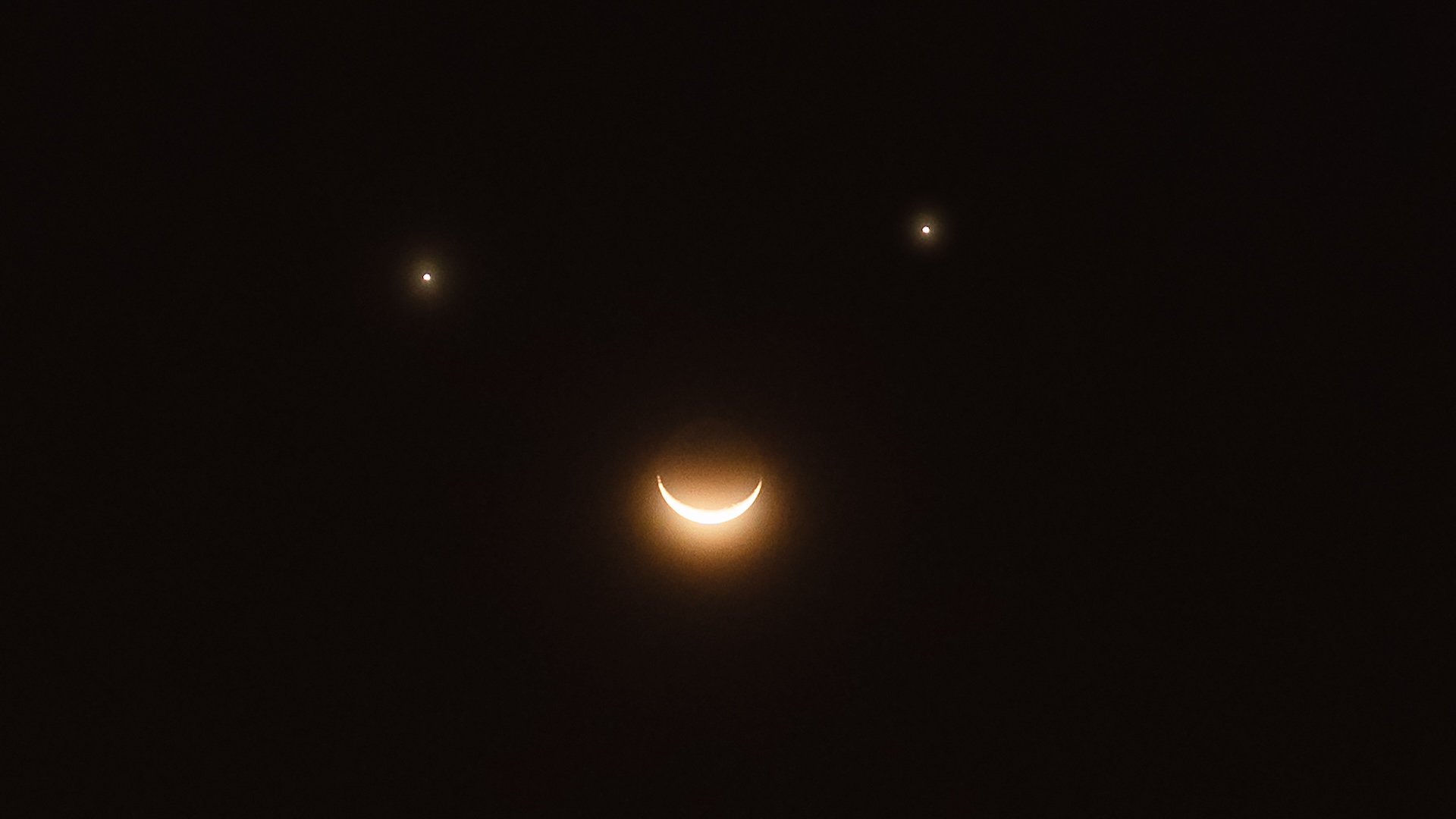

On the morning of April 25, skywatchers around the world will be treated to a rare and charming celestial event: a “smiley face” in the sky. This unique phenomenon will occur when Venus, Saturn, and a slender crescent moon align in a triangular formation near the eastern horizon—forming what looks like a smiling face in the predawn sky.
NASA has forecast this spectacle, known as a triple conjunction, to appear just before sunrise. If you rise early and look toward the eastern sky, you may catch this fleeting yet delightful alignment grinning back at you.
In this cosmic configuration, bright Venus will shine highest in the sky, Saturn will sit lower and to one side, and the crescent moon will curve below them—mimicking a smile. The natural brilliance of both Venus and Saturn means they’ll be visible to the naked eye, even without telescopes or binoculars. However, using a backyard telescope or stargazing binoculars can enhance the view, especially if you want to observe the delicate arc of the moon's illuminated edge.
Mercury might also make a subtle appearance beneath the main trio, adding an extra sparkle for those observing from a location with a clear and unobstructed view of the horizon. Unlike Venus and Saturn, Mercury hugs the horizon tightly and can be tricky to spot, especially in areas with light pollution or hilly terrain.
In astronomical terms, a conjunction occurs when two celestial objects appear very close together in the sky from our perspective on Earth. A triple conjunction, as the name suggests, involves three such objects. These events are relatively uncommon, and ones that form recognizable shapes—like a face—are even rarer.
“Venus is higher above the eastern horizon with Saturn lower, and a thin, crescent Moon a bit lower and a little farther north,” said NASA Solar System Ambassador Brenda Culbertson in an interview with Kansas TV station KSNT. “The thin, crescent Moon looks like a smile. To some people, the triangle of bright objects may appear as a smiley face.”
The best viewing window is short—Culbertson notes that the alignment will become visible around 5:30 a.m. local time and will last for less than an hour before the sun rises and washes out the sky with daylight.
To get the best view of this rare alignment, NASA recommends finding a location with a clear view of the eastern horizon and minimal light pollution. Open areas such as fields, beaches, or high-elevation viewpoints will offer optimal conditions. Even though the planets are visible to the naked eye, a pair of binoculars can enhance your experience, especially for capturing finer details of the crescent moon.
Keep in mind that weather conditions can significantly impact visibility. A cloudless sky will be essential, so it’s worth checking your local weather forecast in advance if you're planning to catch the show.
This celestial smile will come just days after another exciting event in the night sky: the peak of the Lyrids meteor shower, which occurs between the nights of April 21 and 22. The Lyrids are known for their fast, bright meteors, and under ideal dark-sky conditions, observers can expect to see up to 15 meteors per hour. Fortunately, the moon will be a waning crescent during the peak, providing dark skies and better visibility for both the meteor shower and the upcoming conjunction.
While these kinds of planetary alignments happen occasionally, ones that form such a familiar and heartwarming shape are quite rare. For stargazers, amateur astronomers, and casual skywatchers alike, the morning of April 25 offers a beautiful and memorable reason to wake up early.
Don’t miss your chance to see the sky smile back at you.