How to Take a Loop of the Entire U.S. by Train
Facts 08/12/2025 23:08
When plans for a government-funded dam in the Brdy region of the Czech Republic collapsed after seven years of delays, no one expected the solution to come from a group of unexpected engineers: eight beavers.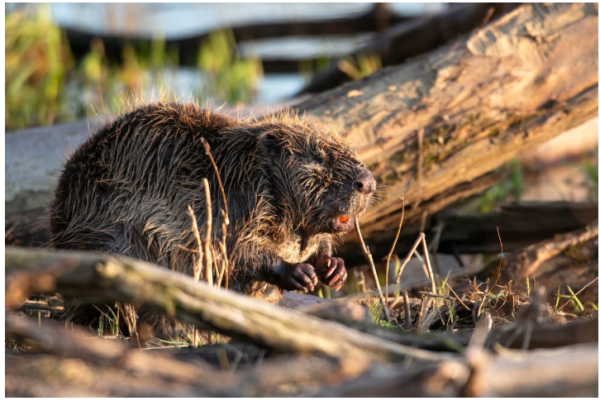
Officials had secured more than a million dollars for a man-made dam to address growing water-management problems. Yet despite years of planning, one major obstacle remained unsolved — they simply couldn’t obtain the necessary construction permits. The project froze, and local authorities had no clear path forward.
Then, in the middle of January, residents awoke to a surprise that felt almost unbelievable: a fully functioning dam had appeared overnight — built not by humans, but by beavers. And they did it for free.
“Beavers always know best,” remarked Jaroslav Obermajer, head of the Central Bohemian branch of the Czech Nature and Landscape Protection Agency. His comment was half-joking, yet perfectly captured the admiration sparked by the animals’ work.
Beavers are famous for their ability to reshape entire landscapes. Using wood, mud, stones, and branches, they construct dams that slow water flow and create wetlands — habitats rich in life. These beaver ponds support countless species: insects, amphibians, fish, herons, moose, and even bison. They also function as natural carbon sinks, flood buffers, and firebreaks.
Gerhard Schwab, a veteran beaver manager in Bavaria, said he wasn’t surprised by the outcome — beavers are remarkably capable. But he doubts the narrative that the animals built everything “in a single night.”
“To me, that sounds like saying the pyramids were built in one week,” he said. “More likely, the beavers had been working for weeks, unnoticed.”
Still, the result is undeniable: a natural dam that accomplishes exactly what local officials had planned, only without bureaucracy, heavy machinery, or a million-dollar budget.
Scientists classify beavers as one of the world’s most important ecosystem engineers — species that actively transform their environment in ways that benefit many others. Their influence can be massive: the largest known beaver dam in Canada’s Wood Buffalo National Park is so huge — spanning seven football fields — that it’s visible from space.
And their engineering skills often outperform ours.
In Oregon, researchers discovered that beavers on the grounds of a multimillion-dollar water-treatment facility were removing pollutants such as heavy metals twice as effectively as the human-built infrastructure.
Because of successes like these, Indigenous groups like the Yurok Tribe in California now build beaver-dam analogues — structures that mimic beaver dams in areas where introducing beavers is restricted. These attract real beavers, restoring ecosystems dramatically.
The value of beaver-built wetlands was also undeniable after Idaho’s Sharps Fire: while hillsides burned to ash, the valleys shaped by beavers remained lush, green, and protected.
Eurasian beavers once nearly disappeared from Europe due to overhunting. But decades of conservation and reintroduction efforts have brought them back — including in the Czech Republic, where their return is now paying environmental dividends.
Ben Goldfarb, author of Eager: The Surprising, Secret Life of Beavers and Why They Matter, praised Czech officials for embracing the animals’ contribution rather than dismissing it simply because it wasn’t part of the original plan.
“The authorities recognized that the beavers had effectively fulfilled the project’s purpose,” he noted. “They’re letting the animals continue their work naturally — and that’s the right decision.”
Schwab, fresh from surveying a Belgian valley filled with newly formed ponds and channels created by beavers, put it even more simply:
“A creek without beavers is not a creek. It’s just water.”