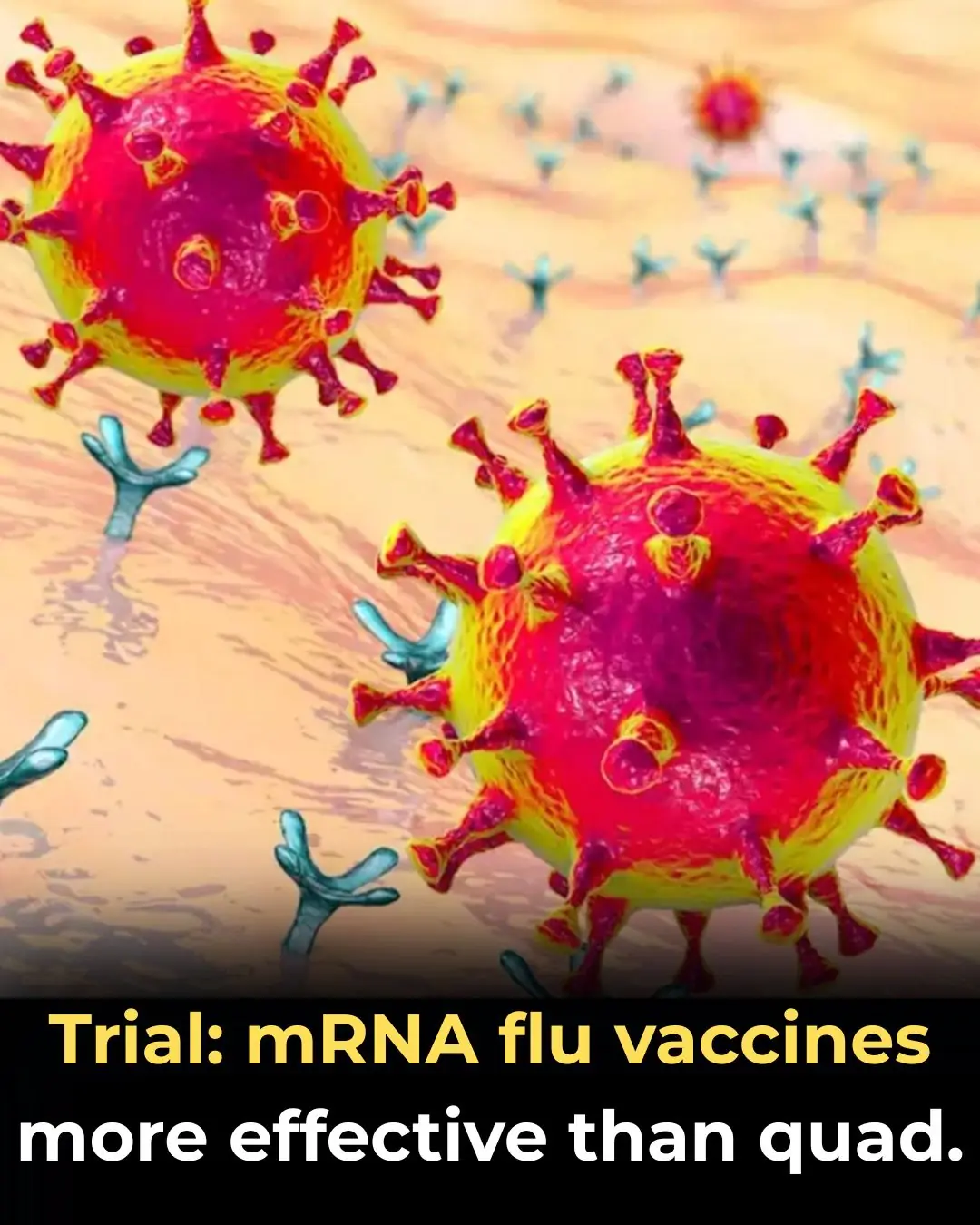
mRNA Flu Vaccines Show Higher Effectiveness Than Traditional Quadrivalent Shots, Phase 3 Trial Finds
Health 23/12/2025 23:03

Cancer Detection After a Stubbed Toe
In May last year, Paul Angliss, 62, experienced "severe lower back pain." However, at the time, he thought it was just a sign of aging, so he didn't seek medical attention. Two years prior, he had felt something similar and assumed the symptom was simply recurring.
In August 2024, Paul, along with his partner Priya Gohil (52) and daughter Nancy (16), traveled to Japan. He "struggled to climb" Mount Fuji in excruciating pain.
"I kept telling Priya and Nancy to go ahead, trying to act like a hero, but the energy in my legs seemed to disappear after every ten steps," he recalled. "I regained a little strength and stubbornly made it to the top."
Unexpectedly discovering bone-eating cancer after a stumble: It turns out the body had been signaling for help for a long time, but he ignored it - Photo 1.
Paul with his partner and daughter.
Paul said he had to wear a heat pad on his back for the rest of the trip. By October 2024, while at home in Stoke Newington, North London, Paul stubbed his toe against a chair.
"A shock of pain shot down my spine, and I became paralyzed, my neck muscles spasming," he recalled.
Unaware that he had fractured his C3 vertebra, Paul, who works in financial reporting, still tried to endure. Priya called an ambulance, and medical staff, unaware of the fracture, did a basic check-up and advised him to see a doctor, offering pain relief medication.
Paul said it took him two and a half hours to move from a standing to a lying position, as he still didn't realize his neck was broken. A few days later, he decided to go to the emergency room.
After a series of tests, including an MRI, Paul was fitted with a neck brace, and the doctor informed him that his condition was extremely rare.
"They said they suspected I had multiple myeloma because it’s very unusual for someone to stub their toe and break their neck – it was really a shock," Paul recalled.
A week later, blood test results confirmed that Paul had multiple myeloma, a form of blood cancer affecting the bones. Although shocked, Paul expressed his gratitude for the swift handling of his condition.
"Multiple myeloma weakens bones – you wouldn't know you have it unless you fracture a bone," he said. "They found about 28 holes in my spine, so I’m really lucky the disease was detected early."
"When you have this disease, you lose more bone than you create, and if I hadn’t fractured my neck, things could have been much worse. The spine could have completely collapsed because the disease 'eats away' at the bones."
Unexpectedly discovering bone-eating cancer after a stumble: It turns out the body had been signaling for help for a long time, but he ignored it - Photo 2.
Paul receiving cancer treatment at the hospital.
According to Blood Cancer UK, multiple myeloma is a form of blood cancer that attacks the bone marrow and can cause a variety of symptoms. The organization states that around 6,300 people in the UK are diagnosed with the disease each year. Although there is no cure, current treatments help manage the disease and prolong life.
Paul was transferred to St Bartholomew’s Hospital in London and began weekly chemotherapy in November 2024 for four months. He underwent a stem cell transplant on April 10 of this year, which temporarily made him tired and somewhat weak.
Paul then entered the maintenance phase of his cancer treatment, regularly monitored before being offered to participate in a new drug trial, which began on September 15.
"I was quite anxious because I had to undergo a bone marrow biopsy, which I had done before, and it was very painful," Paul confessed.
However, this time it was less painful, and he received helpful advice from the Macmillan Cancer Support online cancer patient forum before joining the trial.
Seek Medical Attention if You Experience Abnormal Symptoms
In September of this year, Paul was informed that there were no cancer cells left in his blood, and on October 13, he received the news that he had pushed the disease into remission.
"My oncologist is very optimistic, and there are many alternative drugs available if the current one stops working," he shared.
Unexpectedly discovering bone-eating cancer after a stumble: It turns out the body had been signaling for help for a long time, but he ignored it - Photo 3.
The man shares his story in hopes of raising awareness about the disease.
Now, Paul is participating in a campaign to raise awareness about blood cancer with Blood Cancer UK. He also praised the Maggie’s organization, a charity that provides care and support for cancer patients, as a valuable source of encouragement.
"If you're experiencing severe back pain that can’t be explained by heavy lifting or muscle strain, see a doctor," he advised.
"You learn a lot about yourself going through something like this – you no longer take your health for granted, and you learn to listen to your body. I’m lucky that I’m still able to work, have my family by my side, and was diagnosed early – not everyone has that."
The Earliest Symptoms of Liver Cancer – Knowing Them Can Save Your Life