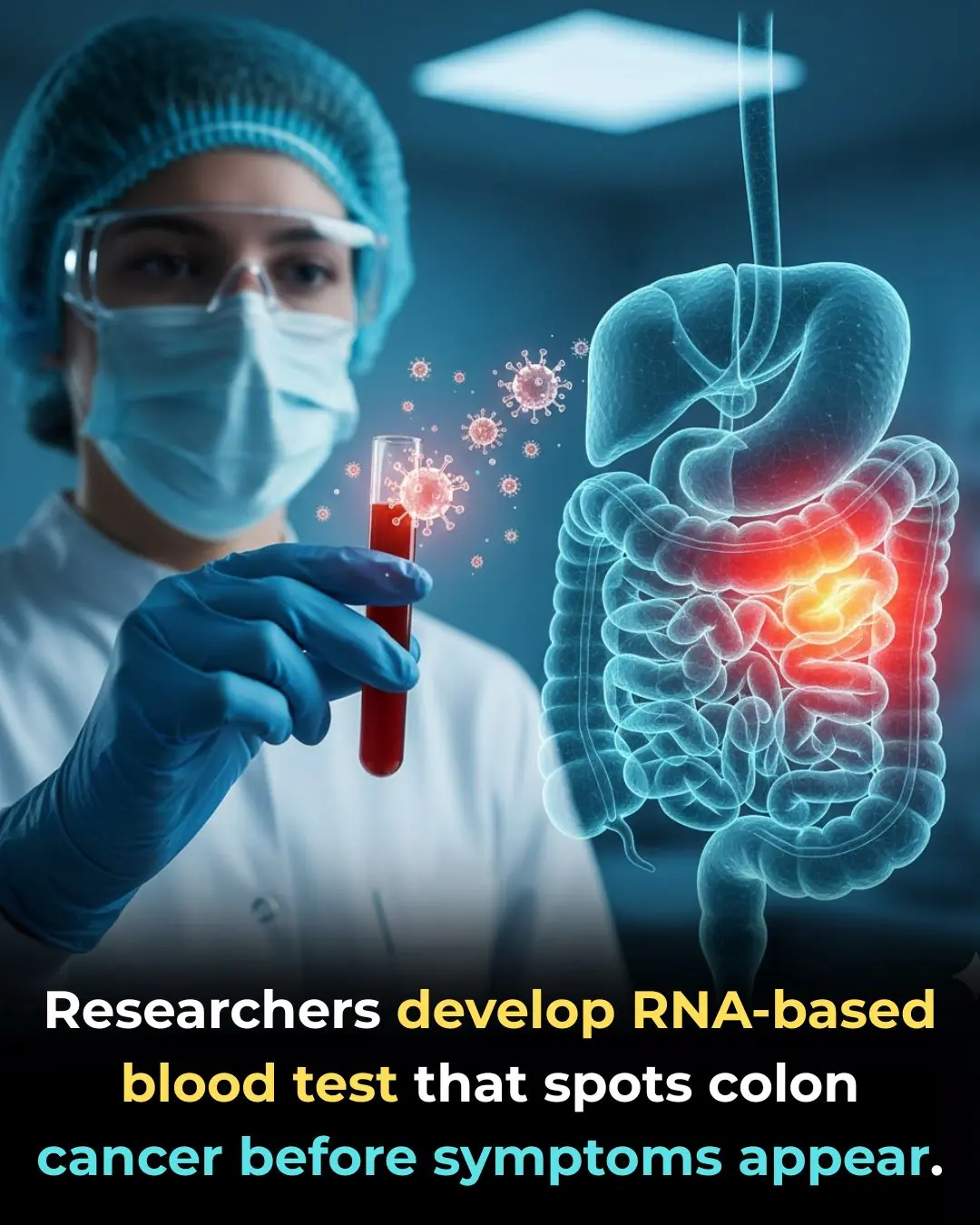
Breakthrough RNA-Based Blood Test Shows 95% Accuracy in Early-Stage Colon Cancer Detection
Facts 17/12/2025 20:34
A Month in Space Can Make Human Cells Appear Older
Even a relatively short stay in space may accelerate cellular aging. In a recent experiment, scientists sent human blood-forming stem and progenitor cells into Earth’s orbit to observe how they respond to the unique stresses of spaceflight. After spending between 32 and 45 days exposed to microgravity and cosmic radiation, these cells displayed biological changes that closely resemble the hallmarks of accelerated aging on Earth. The results add to a growing body of evidence that space is a profoundly challenging environment for the human body—down to the cellular level.
Blood-forming stem cells, also known as hematopoietic stem and progenitor cells, play a vital role in human health. They are responsible for continuously producing red blood cells, white blood cells, and platelets, which are essential for oxygen transport, immunity, and blood clotting. In the space-based experiment, researchers found that these cells became unusually overactive. Instead of cycling between periods of activity and rest, they burned through their energy reserves, failed to enter a restorative dormant state, and gradually lost their regenerative capacity.
At the molecular level, the changes were striking. The cells accumulated DNA damage and showed signs of telomere shortening—the gradual erosion of the protective caps at the ends of chromosomes that is widely associated with aging and age-related diseases. Scientists also observed mitochondrial stress, meaning the cells’ energy-producing structures were functioning less efficiently. In addition, inflammation-related pathways were heightened, and, unexpectedly, previously silent regions of the genome became activated. Such genomic instability is commonly seen in aging tissues and in certain cancers, raising concerns about long-term health risks.
Some of these space-induced changes proved to be partially reversible. When the stem cells were returned to Earth and grown under normal gravity conditions, researchers observed a degree of recovery. However, not all damage was undone, suggesting that even short-term exposure to space can leave lasting biological marks. This finding echoes results from other space biology studies, including NASA’s famous Twins Study, which documented long-term physiological and genetic changes in astronaut Scott Kelly after a year aboard the International Space Station (NASA; Science).
The implications are significant. If blood-forming stem cells lose strength or functionality, the immune system may weaken, wound healing may slow, and susceptibility to disease could increase. For astronauts embarking on long-duration missions—such as future journeys to Mars—these risks are especially concerning. Space agencies like NASA and the European Space Agency are actively studying countermeasures, including artificial gravity, radiation shielding, and pharmacological interventions, to protect astronauts’ cellular health (European Space Agency; Nature Medicine).
Beyond space exploration, the findings have important implications for life on Earth. By accelerating aging-like processes in a controlled environment, space serves as a natural laboratory for studying how and why cells age. Insights gained from these experiments could help scientists better understand age-related diseases, immune system decline, and bone marrow disorders, potentially leading to new therapies. As noted by researchers publishing in journals such as Cell and Nature, studying extreme environments often reveals biological mechanisms that are otherwise difficult to observe.
In short, the study shows that space does more than challenge human endurance—it reshapes biology at its core. Even a month in orbit can push critical stem cells toward an aged state, reminding us that as humanity reaches farther into space, protecting cellular health will be just as important as building rockets and spacecraft.