Russian Scientists Revive Ancient Rotifers from Siberian Permafrost: A Breakthrough in Cryobiology
Facts 17/12/2025 22:12
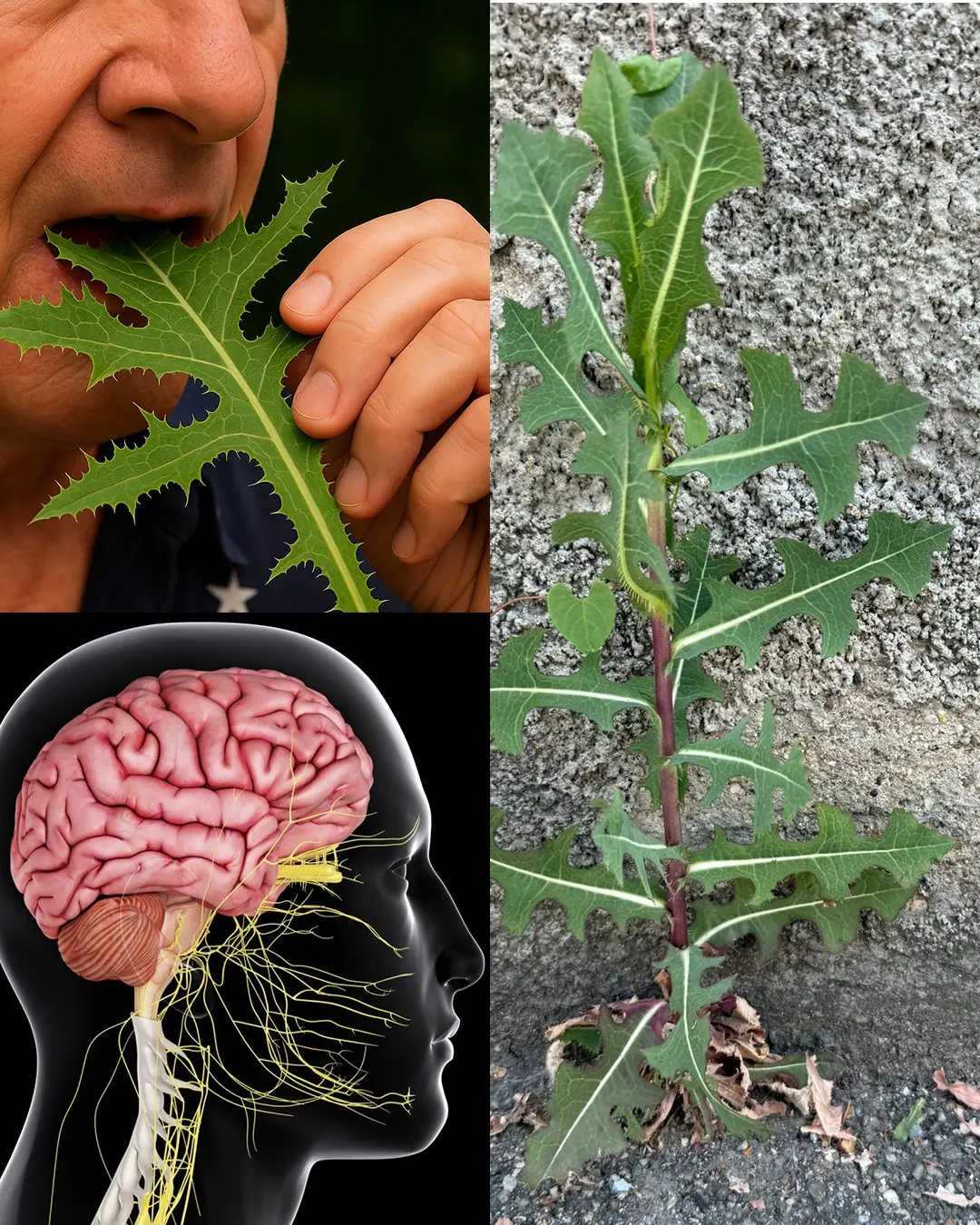
When most people spot dandelions, they see nothing more than an annoying weed invading their carefully trimmed lawn—or a puffball children gleefully blow apart while making wishes. Rarely does anyone look at this common plant and think of medicine. Yet beneath the soil, the humble dandelion may be hiding a surprisingly powerful secret.
In recent years, researchers in Canada have been investigating whether dandelion root could play a role in fighting colon cancer. While the findings are still preliminary, the results have sparked serious scientific interest and raised intriguing questions about the untapped medical potential of plants we often overlook.
Scientists from the University of Windsor and the University of Ottawa collaborated on a study examining the effects of dandelion root extract (DRE) on colon cancer cells. Their findings, published in the peer-reviewed journal Oncotarget, were striking: more than 95% of colon cancer cells died within 48 hours of exposure to the extract.
It’s important to note that these experiments were conducted in vitro, meaning in laboratory dishes rather than in living human bodies. Still, results of this magnitude are rare enough to warrant further investigation.
The cancer cells died through apoptosis, a process often described as “programmed cell death.” Apoptosis is the body’s natural mechanism for eliminating damaged or dangerous cells. Cancer cells are notorious for evading this process, allowing them to multiply uncontrollably. When a substance can effectively re-trigger apoptosis in cancer cells, it immediately draws the attention of researchers.
One particularly encouraging aspect of the study was that dandelion root extract worked on different types of colon cancer cells. The researchers tested it on HT-29 cells, which carry a mutation in the tumor-suppressor gene p53, as well as HCT116 cells, which have a normal, functioning version of that gene.
This is significant because many cancer treatments rely heavily on whether p53 is intact. Since mutations in this gene are common in cancers, therapies that depend on it often fail. Dandelion root extract appeared to bypass this limitation, showing effectiveness regardless of the p53 status.
The research extended beyond the lab to include in vivo studies using mice. When mice with colon tumors were given oral doses of dandelion root extract, tumor growth slowed dramatically—by more than 90% compared to untreated mice.
While these results are impressive, scientists are careful to emphasize an important caveat: what works in mice does not always work in humans. Animal models are a critical step in research, but they are not a guarantee of clinical success.
Dandelion root extract appears to attack cancer cells through multiple biological pathways:
It activates both intrinsic and extrinsic apoptosis pathways, essentially giving cancer cells multiple signals to self-destruct.
It increases levels of reactive oxygen species (ROS) inside cancer cells. While excessive ROS can damage healthy cells, cancer cells are particularly vulnerable to oxidative stress.
It disrupts mitochondrial function—the energy-producing centers of cells—making survival impossible for cancer cells.
These effects are believed to come from naturally occurring compounds in dandelion root, including:
α-amyrin
β-amyrin
lupeol
taraxasterol
These phytochemicals have already been studied for their anti-inflammatory, antioxidant, and anticancer properties in other contexts, lending further credibility to the findings.
Colon cancer isn’t the only area where dandelion root has shown promise. Earlier research suggests broader anticancer potential:
A 2011 study in the Journal of Ethnopharmacology found that dandelion root extract triggered apoptosis in leukemia cells while leaving healthy cells largely unaffected.
A 2012 study reported similar selective effects in melanoma cells.
A 2021 review published in Frontiers in Pharmacology highlighted taraxasterol as a compound with potential anticancer, anti-inflammatory, and immune-supporting properties.
Together, these studies suggest a pattern worth exploring further—but none of them qualify dandelion root as an approved or proven cancer treatment.
Despite the excitement, it’s crucial to approach these findings with caution. Laboratory and animal studies represent only the earliest stages of medical research. Before any substance becomes an accepted treatment, it must undergo extensive human clinical trials to evaluate safety, proper dosage, interactions, side effects, and real-world effectiveness.
As of now, no large-scale clinical trials have tested dandelion root extract in people with colon cancer. Without this data, scientists cannot determine how it behaves in the human body or whether it could safely complement existing therapies.
Dandelion root is widely available as teas, capsules, and tinctures, often marketed for digestion, liver health, or mild detoxification. While it’s generally considered safe in moderate amounts, it is not risk-free.
Dandelion root can interact with medications and may cause side effects such as stomach upset, allergic reactions, or changes in blood pressure—especially at high doses. Anyone undergoing cancer treatment should consult their doctor before using it, as “natural” does not automatically mean safe.
The idea of plants inspiring modern medicine is nothing new. Aspirin originated from willow bark. Taxol, a powerful chemotherapy drug, came from the Pacific yew tree. Periwinkle plants led to the development of drugs used to treat leukemia and lymphoma.
Dandelion root may one day join this list—not as a home remedy, but as the basis for refined, clinically tested treatments. Scientific progress often begins with small, unexpected discoveries.
Dandelion root is far from a proven cancer cure, but it’s also far from meaningless. As research continues, it stands as a reminder that even the most ordinary plants can hold extraordinary potential.
For now, dandelions remain an underdog in cancer research—too promising to ignore, yet too early to celebrate. Still, the idea that a plant growing beneath our feet could one day contribute to the fight against one of the world’s deadliest diseases is both humbling and hopeful.
So before pulling that weed from your yard, it might be worth remembering: nature often hides its most powerful tools in plain sight.