Soaking garlic in honey – a remedy more precious than gold, preventing a multitude of diseases
Tips 26/12/2025 23:11
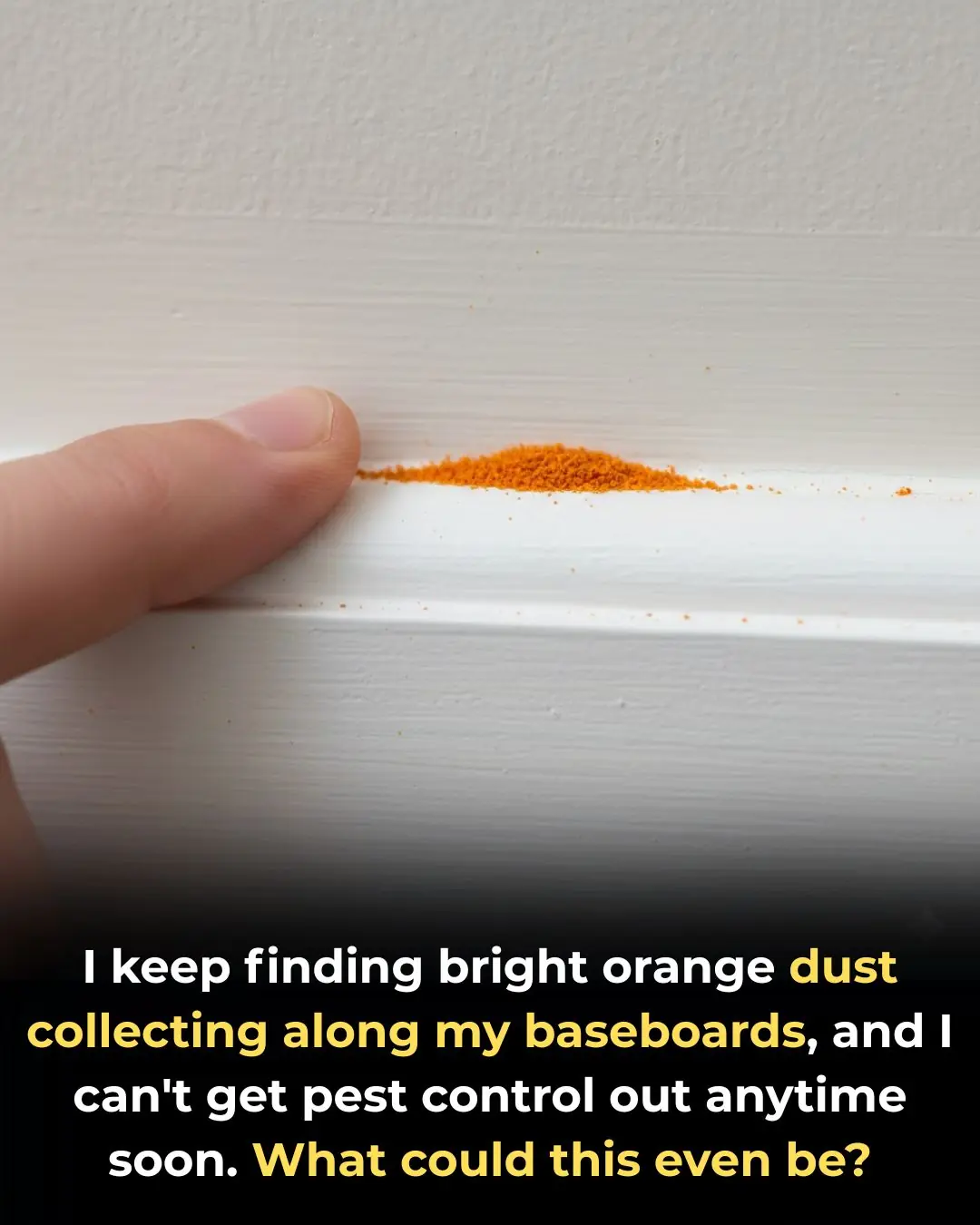
Discovering bright orange dust collecting along your baseboards can be both puzzling and unsettling. At first glance, it may look harmless—just another cleaning issue—but its unusual color often raises concerns about pests, moisture damage, or structural problems hidden beneath the surface.
While waiting for pest control or a professional inspection, understanding the possible sources of this mysterious dust can help you assess the urgency of the situation and take sensible interim steps. From insect activity to rusting hardware and environmental factors, there are several plausible explanations.
This article explores the most common causes of orange dust in homes, how to identify each one, and what you can safely do before expert help arrives.
One of the most common explanations for orange dust is sawdust from deteriorating wood. Homes with wooden floors, baseboards, wall framing, or furniture are especially vulnerable. Over time, moisture, age, or pests can weaken wood, producing fine particles that collect along edges and corners.
Wood-boring insects such as termites and carpenter ants often leave behind frass, a mixture of wood particles and insect waste. Depending on the type of wood and surrounding materials, this debris may appear light brown, reddish, or orange.
What to look for:
Tiny holes in wood surfaces
Soft, spongy, or hollow-feeling wood
Dust piles that reappear after cleaning
If these signs are present, prompt investigation is essential to prevent structural damage.
Termite frass is frequently mistaken for regular household dust, but there are key differences. Unlike ordinary dust, which varies in color and texture, termite frass is typically uniform in size and shape, resembling tiny pellets or grains about 1 millimeter wide.
Frass often forms small piles near baseboards, window frames, or wooden beams—clear evidence of active infestation rather than passive dust accumulation.
Key indicators of termite frass:
Consistent particle size
Pellet-like appearance
Reappears in the same location
If you suspect termites, avoid disturbing the area too much and arrange for a professional inspection as soon as possible.
Carpenter ants do not eat wood, but they excavate it to build nests, pushing out sawdust-like debris as they tunnel. While their frass is usually pale, it can appear orange if mixed with paint, rust, or aged wood fibers.
Signs of carpenter ant activity include:
Small piles of sawdust near walls or baseboards
Faint rustling sounds inside walls
Large black ants appearing indoors
Reducing moisture and sealing cracks can help limit their activity temporarily, but professional treatment is often required.
In humid environments, metal fasteners such as nails, screws, brackets, or corner beads can oxidize. Over time, rust flakes off and settles as fine orange dust along baseboards and walls.
This issue is particularly common in:
Older homes
Bathrooms and kitchens
Basements or coastal areas
Inspect baseboards closely for rust stains or exposed metal. Replacing or sealing affected hardware can prevent further corrosion.
Repeated friction between wooden surfaces—such as doors rubbing against frames or furniture scraping floors—can gradually wear down the material, creating fine dust that accumulates along edges.
This dust may take on a warm or orange hue depending on the wood finish.
Preventive measures include:
Adjusting misaligned doors
Using furniture pads
Applying wax or lubricant to contact points
Routine maintenance can significantly reduce this type of dust.
Over time, paint, stain, and drywall compounds can degrade due to humidity, temperature changes, and UV exposure. As these materials break down, pigmented particles may flake off and settle as colored dust.
Look for:
Peeling or cracking paint
Faded or chalky surfaces
Dust concentrated near painted areas
Repainting or sealing surfaces can stop further deterioration and improve indoor air quality.
Construction materials such as brick, tile, grout, and concrete can shed dust as they erode or crack. If these materials were poorly sealed or exposed to moisture, they may produce reddish or orange particles.
Check for:
Crumbling grout
Chipped tiles
Powdery residue on masonry
Sealing and repairing damaged areas can prevent ongoing dust formation.
Sometimes the simplest explanation is the correct one. Outdoor soil, pollen, and road dust—often rich in iron oxides—can be tracked inside and accumulate along baseboards.
This is common in homes with:
Gaps around doors or windows
High foot traffic
Inadequate entry mats
Improving sealing, cleaning regularly, and using air purifiers can significantly reduce indoor dust.
Certain molds and fungi release rust-colored spores that resemble orange dust. These thrive in damp, poorly ventilated areas and may signal hidden moisture problems.
High-risk locations include:
Basements
Bathrooms
Kitchens
Areas near leaks
If mold is suspected, improving ventilation and controlling moisture is critical. Professional remediation may be necessary for safe removal.
Pet toys, rugs, cushions, decorative objects, and low-quality fabrics can degrade over time, shedding colored particles. Sunlight, friction, and age accelerate this process.
Inspect nearby items for:
Crumbling foam or rubber
Fading or powdery surfaces
Replacing deteriorating items often resolves the issue quickly.
Some viral cleaning hacks unintentionally worsen dust issues. Abrasive cleaners or harsh chemicals can break down finishes, leaving residues that attract more dust or cause materials to deteriorate faster.
Stick to:
Non-abrasive cleaners
Gentle cleaning tools
Products designed for specific surfaces
Always test new cleaning methods in a small area first.
While waiting for professionals, a few simple tests can help identify the source:
White paper test: Place paper under the affected area and check for new dust over several days
Texture test: Rub particles between your fingers—gritty may suggest construction materials; pellet-like suggests pests
Tap test: Gently tap nearby surfaces to see if dust falls
These observations can provide valuable clues and help professionals diagnose the issue faster.
Bright orange dust along baseboards may look alarming, but it doesn’t always indicate a serious problem. From insects and rust to moisture, friction, and everyday household wear, many causes are manageable once identified.
The key is careful observation, timely action, and professional evaluation when needed. Addressing the issue early can prevent costly repairs and help maintain a safe, healthy home environment.