Meet Jonathan: The 193-Year-Old Tortoise Who Has Witnessed Three Centuries of History
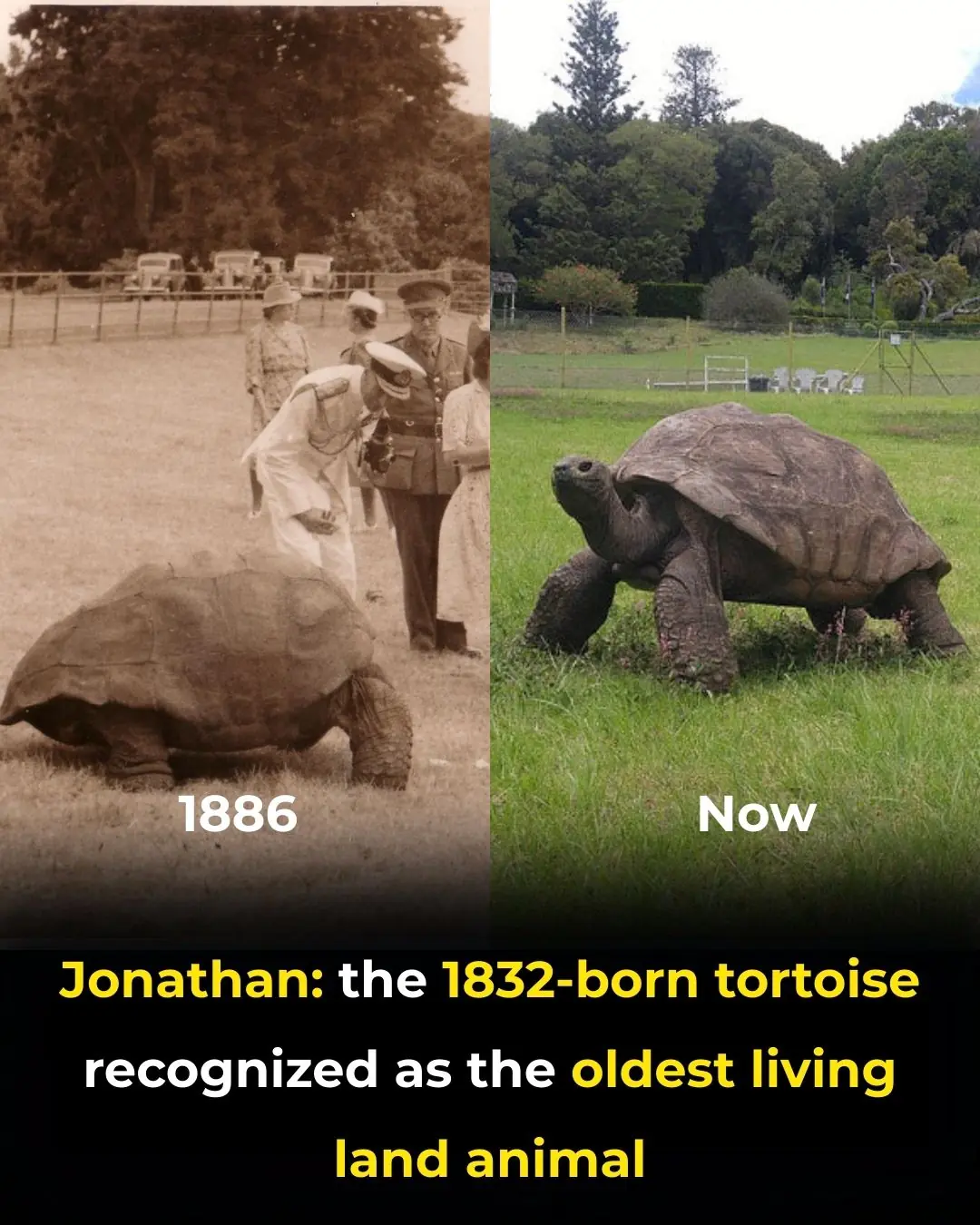
Jonathan is not just old—he is a living relic of human history. Born around 1832, Jonathan predates the invention of the lightbulb, the telephone, automobiles, airplanes, and even the widespread use of photography. When the first known photograph of him was taken in 1886, he was already more than half a century old. Today, he is officially recognized as the world’s oldest living land animal and the oldest tortoise ever recorded, a title confirmed by Guinness World Records.
Jonathan is a Seychelles giant tortoise (Aldabrachelys gigantea hololissa). He arrived on the remote island of Saint Helena in 1882 as a gift to the British colonial administration. At that time, experts believe he was already about 50 years old, meaning he had hatched during the early years of Queen Victoria’s reign. Since then, Jonathan has remained on the island continuously, becoming one of its most treasured residents.
Over the course of his extraordinary life, Jonathan has outlived 31 governors of Saint Helena, lived through three different centuries, and witnessed dramatic changes in the human world—from the age of sailing ships and handwritten letters to satellites, smartphones, and artificial intelligence. His symbolic importance to the island is so great that he has appeared on Saint Helena’s coins and postage stamps, serving as a living emblem of endurance and continuity.
Today, at approximately 193 years old, Jonathan resides on the lush lawns of Plantation House, the official residence of Saint Helena’s governor. He shares his peaceful home with fellow tortoises Emma and Fred, enjoying a calm daily routine. Age has taken its toll: Jonathan is now blind due to cataracts and has lost his sense of smell. Because of this, he is carefully hand-fed fresh fruits and vegetables, including carrots, apples, bananas, and leafy greens.
Despite these challenges, Jonathan’s health is considered remarkably stable for an animal of such advanced age. His appetite remains strong, his digestion is good, and he still moves around the grounds with surprising determination and resilience. According to veterinarians, giant tortoises are known for their slow metabolism, robust physiology, and exceptional longevity—traits that have allowed Jonathan not only to survive, but to thrive far beyond the lifespan of most animals.
Jonathan’s life offers a rare biological insight into extreme longevity. Scientists studying long-lived species note that giant tortoises benefit from low cellular damage, efficient DNA repair mechanisms, and reduced metabolic stress, all of which may contribute to their extraordinary lifespan. His continued survival provides valuable observational data for researchers interested in aging, resilience, and long-term animal care.
From the era of wooden ships to the digital age, Jonathan stands as a quiet witness to human progress. He reminds us that while civilizations rise and fall, some giants of nature endure—aging slowly, gracefully, and with remarkable strength. In a fast-changing world, Jonathan’s steady presence is a powerful symbol of patience, survival, and the enduring rhythms of the natural world.
Sources (trusted references):
-
Guinness World Records – Oldest living land animal record
-
Government of Saint Helena – Plantation House official records
-
Smithsonian’s National Zoo & Conservation Biology Institute – Giant tortoise longevity research
-
National Geographic – Studies on long-lived animal species
-
BBC Earth – Documented reports on Jonathan the tortoise