5 Most Common Deathbed Regrets, According to Palliative Care Nurse
Health 12/02/2026 13:46
Alzheimer’s disease is the leading cause of dementia in the UK, as noted by the NHS. While the exact cause remains unclear, medical professionals have identified several potential factors that may contribute to its development. These include increasing age, untreated depression, a family history of the condition, and lifestyle factors linked to cardiovascular diseases.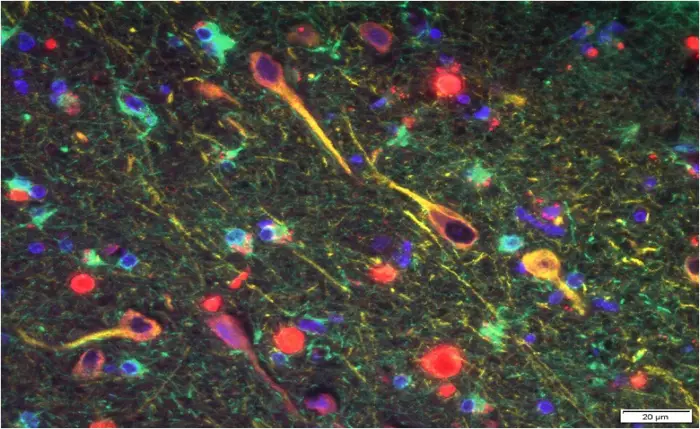
However, recent scientific research has been challenging the conventional understanding of Alzheimer’s as a purely neurodegenerative disease. An increasing number of studies suggest that Alzheimer's could also be an infectious disease.
One such study, conducted in 2019, proposes a link between Alzheimer’s and gum disease. Led by microbiologist Jan Potempa from the University of Louisville, the study found the presence of Porphyromonas gingivalis – the bacterium responsible for chronic periodontitis (gum disease) – in the brains of deceased Alzheimer’s patients.
In their findings, Potempa and his team discovered that P. gingivalis produced gingipains (toxic enzymes, shown in red) among the neurons of Alzheimer's patients' brains, which could contribute to the disease’s progression. These toxic enzymes have been linked to increased production of beta-amyloid (Aβ), the sticky proteins commonly associated with Alzheimer's. A previous experiment involving mice also showed that oral infection with P. gingivalis led to a significant increase in beta-amyloid production in the rodents' brains.
"Infectious agents have been implicated in the development and progression of Alzheimer’s disease before, but the evidence of causation hasn’t been convincing," said Dr. Stephen Dominy, co-founder of Cortexyme, Inc., the company behind the mice experiment.
The researchers found that elevated levels of gingipains were associated with the presence of tau and ubiquitin proteins, both of which are linked to the development of Alzheimer’s. However, the team also made an intriguing discovery: P. gingivalis was present in the brains of individuals who had never been diagnosed with Alzheimer’s. This raises the question of whether these individuals would have been diagnosed with Alzheimer's had they lived longer, or whether poor oral care due to Alzheimer’s disease contributed to the infection.
“Our identification of gingipain antigens in the brains of individuals with AD and also with AD pathology but no diagnosis of dementia argues that brain infection with P. gingivalis is not a result of poor dental care following the onset of dementia or a consequence of late-stage disease, but is an early event that can explain the pathology found in middle-aged individuals before cognitive decline,” the authors explained in their paper.
Additionally, the mice experiment revealed that a compound called COR388, developed by Cortexyme, was able to reduce amyloid-beta production and neuroinflammation. While these results are promising in mice, it remains to be seen whether they would have the same effect in humans.
David Reynolds, Chief Scientific Officer at Alzheimer’s Research UK, commented, “Drugs targeting the bacteria’s toxic proteins have so far only shown benefit in mice. Yet, with no new dementia treatments in over 15 years, it’s important that we test as many approaches as possible to tackle diseases like Alzheimer’s.”
These findings underscore the need for continued exploration of Alzheimer's as potentially being both a neurodegenerative and an infectious disease. If future research confirms these results, it could open new avenues for prevention and treatment, particularly targeting oral health and bacterial infections.