🌙 If You Notice These 3 Signs at Night, Your Kidneys Are Likely in Great Shape
Health 14/01/2026 22:13
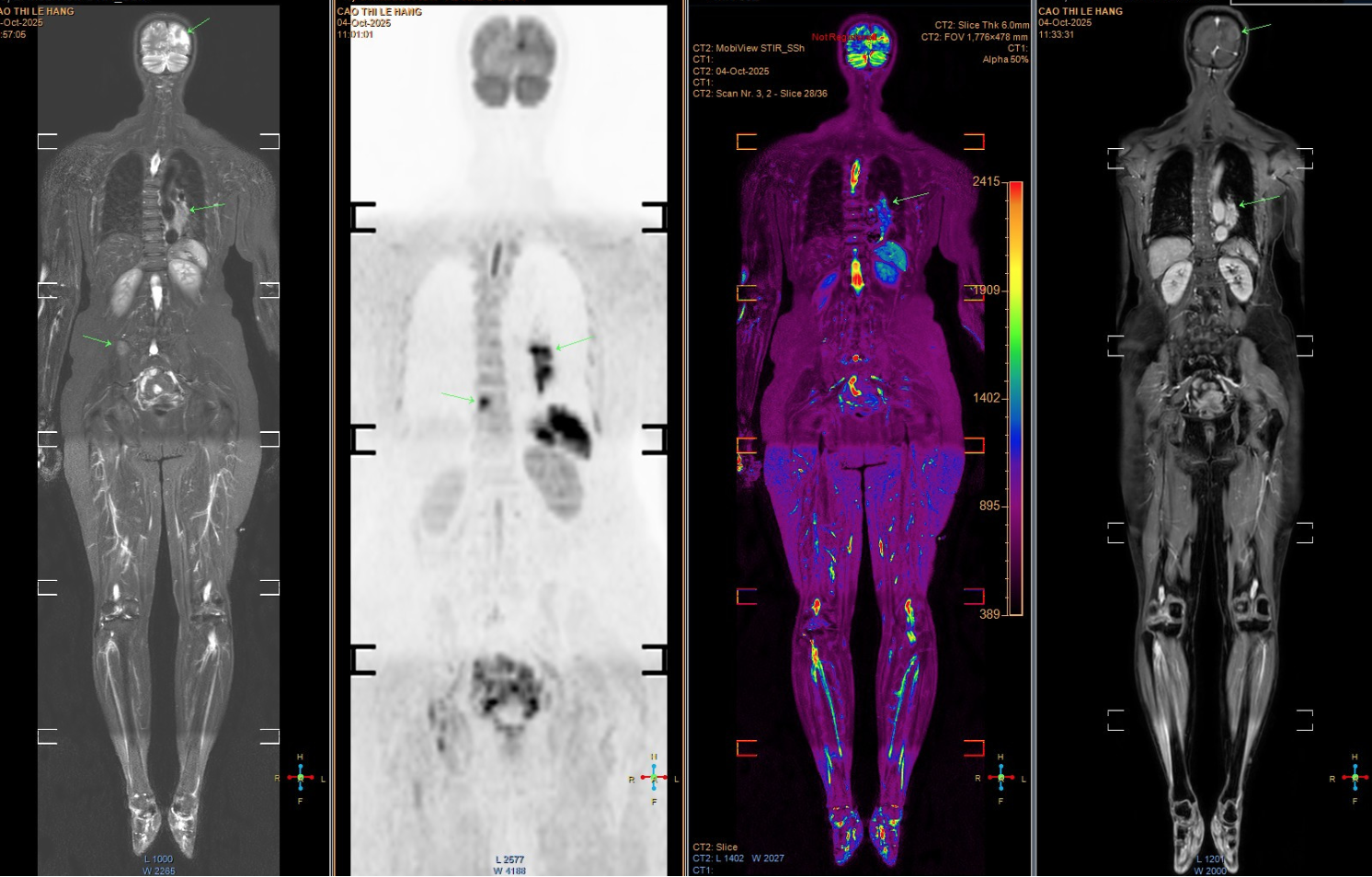
When she went to the hospital for a check-up, the woman was shocked to receive a diagnosis of end-stage lung cancer that had already metastasized to the brain. When doctors explained the cause, she broke down in tears.
Dr. Nguyen Minh Duc, a lecturer at Pham Ngoc Thach University of Medicine (Ho Chi Minh City), said that he recently examined a 63-year-old female patient. According to her account, she had been suffering from prolonged headaches and dizziness. At first, she believed it was merely a vestibular disorder, so she was complacent and mentally prepared herself to “live with the disease.”
However, as the symptoms became more frequent and severe, she finally decided to undergo a medical examination. MRI results revealed multiple metastatic lesions consistent with adenocarcinoma. A chest CT scan then detected a large tumor at the base of the left lung, confirming advanced-stage lung cancer that had metastasized to multiple organs, including the brain. The prognosis was very poor.
According to Dr. Duc, when reviewing the patient’s medical history, she stated that she did not smoke, led a healthy lifestyle, and did not work in a toxic environment. However, her husband and son were heavy smokers, and they often smoked inside the room.
The patient shared that her husband had passed away, and she currently lives with her son, who still maintains the habit of smoking a pack of cigarettes a day. Having been exposed to cigarette smoke for many years, she no longer felt uncomfortable around it. What she did not realize was that passive smoking was in fact the cause of her lung cancer.
Dr. Duc noted that when he explained that both active and passive smoking can lead to lung cancer, the patient burst into tears, worried about her son and grandchildren.
According to Dr. Duc, this is not a rare case. He has treated many women with lung cancer caused by inhaling cigarette smoke from fathers, husbands, or children within the family.
The majority of lung cancer cases are linked to exposure to tobacco smoke. Global statistics also indicate that cigarette smoke is responsible for approximately 80% of lung cancer cases. Toxic substances in tobacco smoke can remain in the lungs of those who inhale it, and over time, they cause cellular changes that lead to cancer.
Notably, it is not only active smokers who face the risk of disease. Passive smokers—those who involuntarily inhale secondhand smoke—also face a high risk, in some cases even higher than that of direct smokers.
“Secondhand smoke contains more than 7,000 chemicals, including at least 70 carcinogenic substances such as benzene, formaldehyde, and arsenic. In addition to causing lung cancer, it also increases the risk of stroke, cardiovascular disease, cancers of the nasopharynx and bladder, and has serious impacts on women and children in the household,” Dr. Duc warned.
Beyond tobacco, many other factors can contribute to lung cancer, including exposure to radiation (radon), asbestos, arsenic, nickel, chromium, as well as air pollution, dust, and a family history of the disease.
According to oncology experts, early-stage lung cancer often presents no typical symptoms, making it difficult to detect or easy to confuse with common respiratory illnesses. By the time patients experience clear symptoms such as persistent coughing, coughing up blood, shortness of breath, or chest pain, the disease is usually at an advanced stage, which makes treatment much more challenging.
In addition to proactively preventing the disease by eliminating risk factors, screening and early detection of lung cancer are always prioritized, as they significantly improve treatment outcomes.
Cancer screening involves searching for disease before symptoms appear, helping to detect cancer at an early stage and creating more favorable conditions for treatment. Once clear symptoms emerge, cancer may have already spread, reducing the chances of successful treatment.