How Long Can Frozen Meat Be Stored? Here’s the Answer
Tips 03/12/2025 23:25
Kettles that are used regularly will eventually develop stubborn limescale buildup, especially in areas with hard water. These chalky white deposits not only look unpleasant but can also affect how quickly your water boils and even alter the taste of your tea or coffee. Fortunately, you don’t need harsh chemicals or endless scrubbing to get your kettle looking brand new again. With a few simple household ingredients, you can clean your kettle effortlessly—and restore its shine in a single boil.
Below are several easy and effective methods to remove limescale, along with tips to keep your kettle clean for longer.
This is one of the most effective and widely trusted methods for removing mineral buildup.
White vinegar
Lemon juice (optional but helpful)
Baking soda
A soft sponge
Mix equal parts water and white vinegar (1:1 ratio). Pour the mixture into the kettle until it reaches about half capacity.
Bring the mixture to a boil. If your kettle doesn’t automatically shut off, turn it off once it reaches boiling.
Let the solution sit for at least 20 minutes. This soaking time helps the vinegar dissolve hardened calcium deposits.
Pour out the mixture and rinse the inside thoroughly with clean water.
If any residue remains, dip a damp sponge into dry baking soda and gently scrub the interior. The mild abrasiveness of baking soda will remove stubborn spots without scratching metal surfaces.
Rinse again with clean water and let the kettle air-dry.
Why this works:
Vinegar contains acetic acid, which breaks down limescale naturally and safely.
If you prefer not to use vinegar, baking soda is an excellent alternative.
Over time, kettles accumulate calcium carbonate, which reacts with baking soda to loosen and dissolve buildup.
Fill your kettle halfway with water.
Add 2–3 tablespoons of baking soda.
Bring the mixture to a boil and allow it to sit for several minutes.
Pour out the water and rinse the inside thoroughly with clean water.
This method is gentle, odor-free, and suitable for frequent cleaning.
This method may sound unusual, but it works surprisingly well.
Potatoes contain natural starches that can soften limescale deposits, making them easier to clean.
Add a handful of potato peels (or a few slices of fresh potato) into the kettle.
Fill the kettle halfway with water.
Boil the mixture and let it simmer for a few minutes.
Pour everything out and rinse the kettle.
After boiling, the loosened limescale often comes off effortlessly with a gentle wipe.
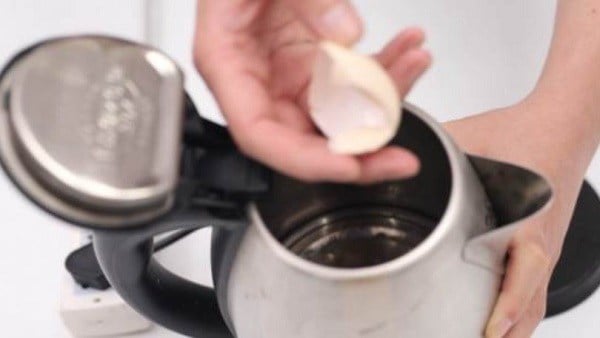
Eggshells act as a natural, gentle abrasive—like a soft scrub that won’t damage your kettle.
Clean the eggshells and crush them into small pieces.
Add the crushed shells into the kettle along with enough water to fill half the kettle.
Bring it to a boil and let it simmer for 5–10 minutes.
Stir occasionally with chopsticks or a spoon to help the shells scrub the interior surface.
Pour everything out and wash the kettle with dish soap and a sponge.
This is an eco-friendly cleaning option that repurposes household waste.
Use filtered water if you live in an area with hard water.
Empty the kettle after each use to prevent minerals from sitting and crystallizing.
Descale once every 1–2 weeks if you use your kettle daily.
Avoid harsh metal brushes, which can damage the inside surfaces and cause rust.