Why You Naturally Sleep With One Foot Outside the Blanket – The Surprising Science Behind It
Health 11/04/2026 16:59

Do you find it difficult to sit for long periods—knowing that within 30 minutes your lower back or glutes will be burning with discomfort? Everyday activities like commuting, attending meetings, watching movies, or even kayaking can become a painful balancing act of subtle shifting and self-massage just to stay seated.
The sciatic nerve is the longest and widest nerve in the human body. It begins in the lower back, travels through the hips and buttocks, and extends down each leg.
Sciatica occurs when this nerve becomes compressed or irritated, leading to pain, tingling, or numbness that may begin deep in the glutes and radiate down the hamstrings or up into the lower back.
You may feel:
A dull ache that intensifies into sharp or shooting pain.
Discomfort centered in the glute, hip, or sacral joint.
Radiating pain that affects one or both legs.
Common causes include herniated discs, spinal stenosis, trauma, or piriformis syndrome.
The piriformis is a small, deep muscle located in the glutes, stretching from the sacrum (the triangular bone at the base of the spine) to the top of the femur (thigh bone). When it becomes tight or spasms, it can press against the sciatic nerve—a condition known as piriformis syndrome.
Symptoms may include:
Pain in the buttock or hip.
Radiating leg pain or tingling.
Reduced mobility and flexibility.
Treatment often involves a combination of stretching, physical therapy, and lifestyle modifications. The good news? These stretches are gentle, effective, and easy to incorporate into your daily routine.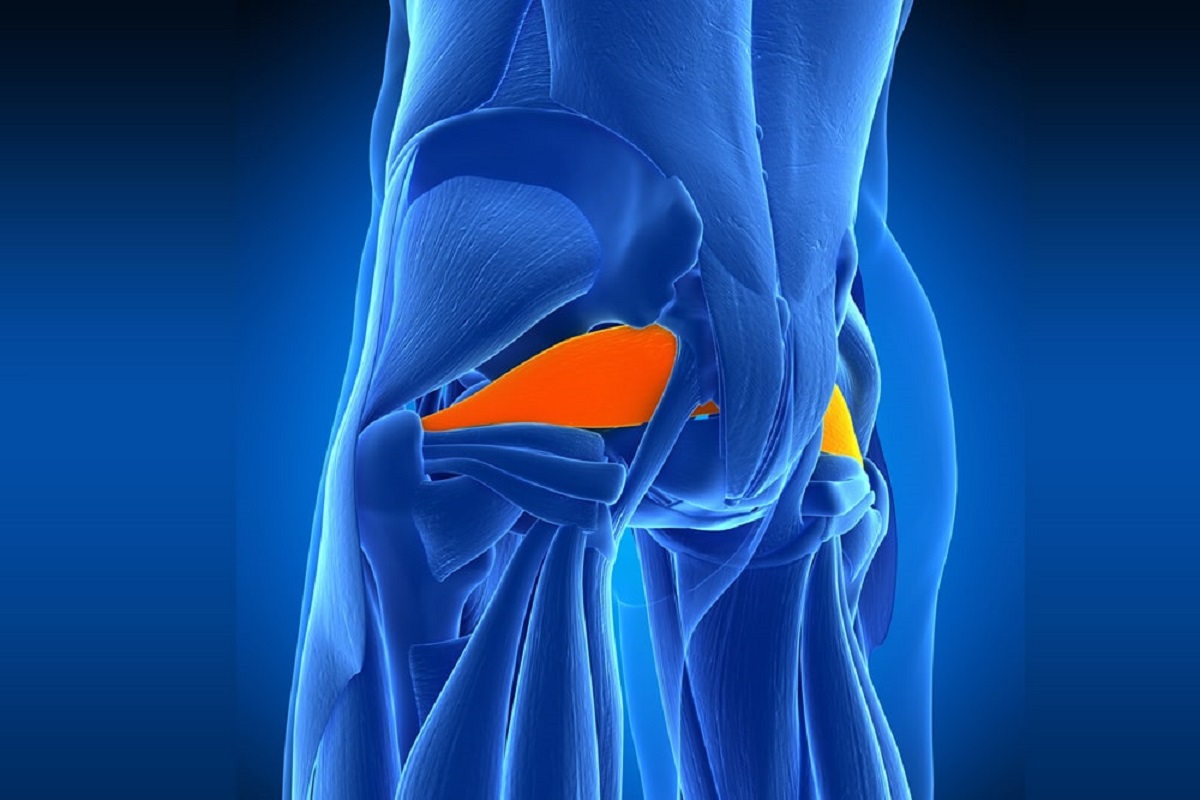
These targeted stretches can be done at your desk, after workouts, or during breaks from long periods of sitting. They’re particularly useful post-exercise or after activities that cause tightness in the hips.
Seated Glute Stretch Sit in a chair. Cross one ankle over the opposite knee and gently lean forward. For a deeper stretch, gently push your knee down with your hand. You can then alternate by pressing your knee up into your hand. This seated variation is ideal for desk work.
Seated Spinal Twist Sit on the floor with legs extended. Cross one leg over the other and place the foot flat on the floor outside the opposite knee. Twist your torso toward the bent knee, hugging it with your arm. This opens the spine and helps relieve nerve compression.
Figure 4 Stretch (Lying Down) Lie on your back and cross one ankle over the opposite thigh to form a “4” shape. Use both hands to gently pull the opposite leg toward your chest. This stretch helps release tension in the hips and glutes.
Knee-to-Opposite-Shoulder Stretch While lying on your back, pull one knee toward your chest, then gently guide it across your body toward the opposite shoulder. This movement helps loosen the piriformis and gluteal muscles.
Standing Hamstring Stretch Place one foot on a chair or elevated surface (like a step). Keeping your spine straight, hinge forward from your hips (not your lower back) until you feel a stretch. This targets tight hamstrings that may contribute to sciatic discomfort.
Standing Piriformis Stretch Balance on one leg and rest the opposite ankle over your knee (similar to the seated Figure 4 stretch). Bend into a slight squat and gently press the raised knee down. Hold onto a wall or chair for balance if needed.
Scissor Hamstring Stretch Stand with one foot forward and one foot back, as if in a lunge or triangle stance. Without bending your knees, hinge forward from your hips with a flat back, leading with your chest. Use a strap or towel looped around your front foot to deepen the stretch if needed.
Forward Pigeon Pose Begin in a plank position. Bring one knee forward and rotate it outward so your shin is roughly parallel to the front edge of your mat. Lower yourself as deeply as your flexibility allows, using blocks or cushions for support if needed. This yoga-based stretch is powerful for releasing deep hip tension.
These stretches should never be painful. Ease into each one slowly, using your breath to guide you—inhale, then deepen the stretch gently on the exhale. Avoid bouncing or forcing yourself deeper into any position.
Tips for safe stretching:
Hold each stretch for 10–30 seconds.
Repeat 2–3 times per side.
Always maintain a straight spine where possible.
Use props (like yoga blocks, straps, or cushions) if needed to support your body.
If your pain persists or worsens, consult a medical professional or physical therapist for a tailored treatment plan.
Regularly incorporating these piriformis stretches is a natural, effective way to manage sciatic nerve pain and improve daily mobility. While they help alleviate symptoms, it’s also important to address any underlying causes, such as poor posture, lack of movement, or muscle imbalances.
By consistently performing these stretches and taking a holistic approach to your wellness, you can reduce discomfort, improve flexibility, and restore pain-free movement to your everyday life.
Do you have a go-to stretch that helps with hip or lower back pain?