Bananas are a familiar, affordable, and highly nutritious fruit that many people enjoy daily. They can be eaten green—often paired with salads or cooked in soups—or savored when fully ripe, used in baking, smoothies, and various desserts.
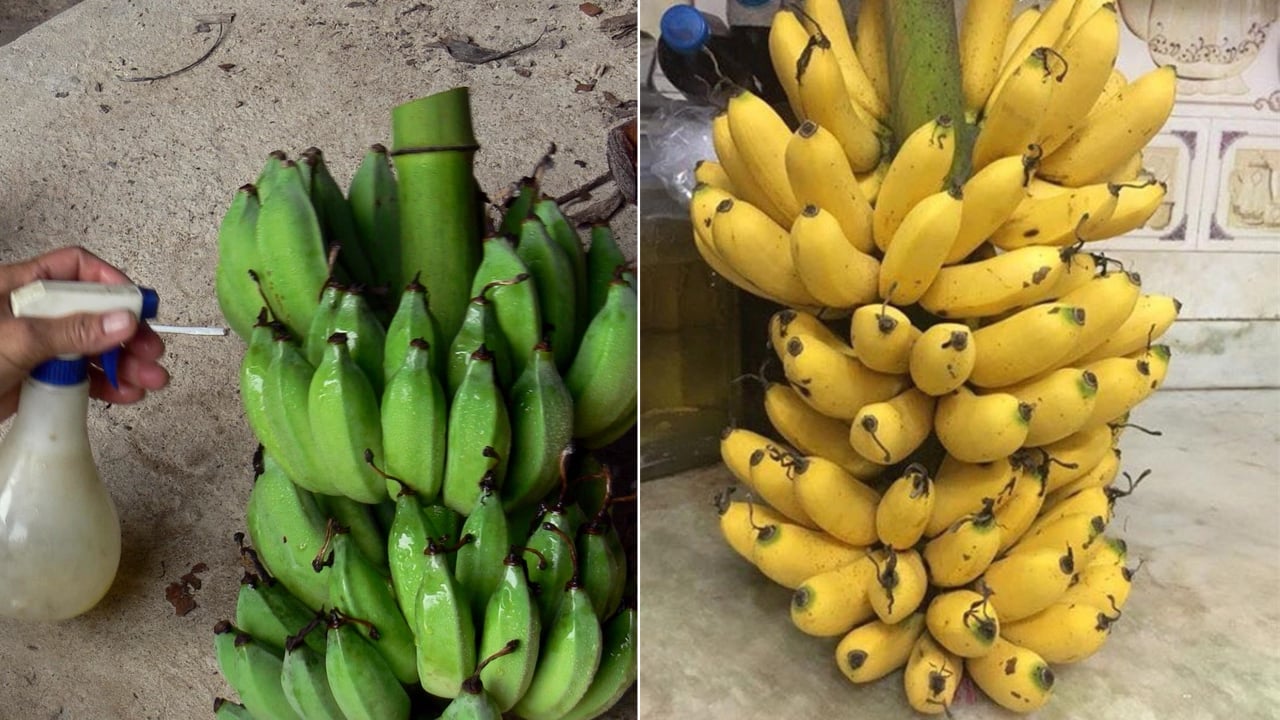
However, because bananas are widely consumed and easy to sell, some vendors harvest them while still completely green and use chemicals to force them to ripen quickly. These bananas usually look uniformly yellow and visually appealing, but they may pose health risks when consumed frequently.
To make sure you’re choosing safe, naturally ripened bananas, here are several simple and reliable ways to tell the difference.
1. Look at the Banana Stem
Freshly harvested bananas have stems that look moist and may still have a bit of sticky sap. The longer bananas have been picked, the drier and darker the stem becomes. Naturally ripened bananas typically have less sap because they ripen gradually. In contrast, bananas harvested prematurely and forced to ripen often still show quite a bit of sap near the stem, indicating they were picked very green.
2. Examine the Skin Color and Texture
According to the experience of many home cooks, chemically ripened bananas often have:
-
A smooth, flawless, uniform golden-yellow peel
-
Very few spots or imperfections
-
A bright and visually perfect appearance
Naturally ripened bananas, on the other hand, rarely ripen evenly. In one bunch, some bananas may be fully yellow while others remain green. Their peels tend to be:
-
Firm yet slightly soft
-
Deep yellow or lightly golden
-
Marked with small brown speckles as they reach peak ripeness
-
Not uniformly colored—some areas may be darker, some lighter
Bananas with many brown speckles are often very sweet; people sometimes refer to them as “tree-ripened” or “sun-ripened” bananas.
3. Notice the Aroma
Naturally ripened bananas give off a strong, sweet, distinct aroma—especially when they are fully ripe. Chemically ripened bananas, however, usually lack this fragrance because they were harvested before reaching maturity. Even if their peel is yellow, the fruit may not have developed its natural scent.
4. Check the Firmness
When touched, naturally ripened bananas feel soft and springy without being mushy. If you press lightly on the peel, you’ll notice a gentle elasticity. Chemically ripened bananas are typically firmer and feel slightly hard or rubbery, even though the skin has already turned yellow.
5. Evaluate the Taste
Flavor is one of the clearest indicators:
-
Naturally ripened bananas taste sweet, aromatic, and smooth in texture.
-
Chemically ripened bananas often taste bland, slightly astringent, or “starchy.” Some may even have a faint sharpness that signals they were not mature when harvested.
If a banana tastes dry or chalky, it is almost certainly artificially ripened.
Additional Buying Tips
To avoid waste and ensure good quality, choose bunches with a mix of ripe and unripe bananas. Eat the yellow ones first; the green ones will slowly ripen over the next few days. This helps prevent the entire bunch from ripening at the same time and going mushy before you can finish them.
If you buy green bananas, select bunches with:
Avoid bunches with very pale green peels—they are too young and may stay hard or ripen poorly.
Mature green bananas ripen quickly at room temperature. If you want them to ripen faster, place them in a rice container or store them alongside other ripe fruits such as apples, which naturally release ethylene gas to accelerate ripening.
When buying bananas that are already ripe and ready to eat, choose those of moderate size with no bruising. Extremely large bananas may have been grown with excessive fertilizer or growth stimulants, while very small bananas are often harvested too early and force-ripened afterward.
Final Thoughts
By paying close attention to stem condition, peel color, aroma, firmness, and taste, you can easily differentiate between naturally ripened bananas and those treated with chemicals. Taking a moment to examine your bananas carefully helps protect your health—and ensures you get the best flavor and nutritional value from this everyday fruit.