
Only a few people manage to solve this
Facts 03/05/2026 23:57
A 38-year-old man was rushed to the hospital after suddenly developing unexplained seizures and signs of altered mental function. What doctors eventually uncovered shocked everyone — parasitic tapeworms had been living inside his brain for many years without his knowledge. The unusual case was documented in The New England Journal of Medicine (NEJM), one of the world’s most respected medical journals, and examined by specialists at Massachusetts General Hospital and Harvard Medical School.
Tapeworm infections in the brain, known as neurocysticercosis, are extremely rare in developed countries, but they are a recognized condition reported by the CDC (Centers for Disease Control and Prevention) and the World Health Organization (WHO) as a major cause of seizures in certain regions of the world.
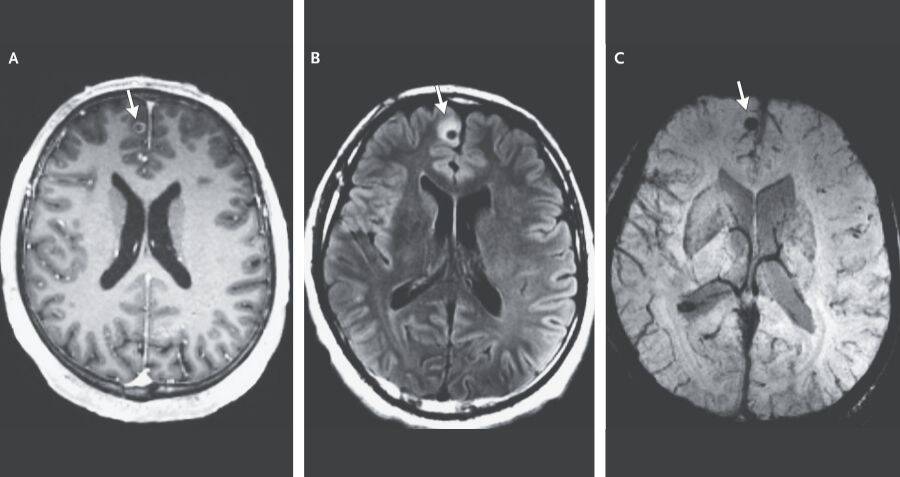
According to the NEJM case report, the man experienced his very first seizure shortly before being admitted. Before losing full control, he began speaking in a strange and incoherent way — using random, nonsensical words and behaving confused and combative.
By the time he reached the emergency department, hospital staff witnessed a generalized tonic-clonic seizure, a serious form of seizure involving uncontrolled muscle activity and loss of awareness. His eyes were open and forced upward, yet he could not speak or follow instructions. Interestingly, his gag and cough reflexes still worked, showing that some basic brainstem functions were intact.
The patient had an unremarkable medical history: no chronic illnesses, no prescribed medications, no substance use, and only occasional alcohol consumption. This made the case even more puzzling for doctors.
The medical team immediately administered two intravenous doses of lorazepam, given seven minutes apart, to stop the ongoing seizure activity. They also inserted an endotracheal tube to secure his airway and ensure he could breathe safely. A chest X-ray revealed no abnormalities, ruling out complications from the intubation.
Since this was his first seizure, doctors emphasized the importance of conducting a full evaluation of his clinical history and potential triggers. In first-time seizure patients, specialists typically look for metabolic causes, infections, neurological conditions, and toxin exposure — procedures supported by guidelines from the American Academy of Neurology.
Blood tests quickly ruled out many of the most common causes of seizures. His sodium levels were normal, meaning he did not suffer from the dangerously low sodium (hyponatremia) that often causes seizures. His kidney and liver function tests were also normal, removing concerns about organ failure.
Toxicology screens of both urine and blood were negative, eliminating the possibility that drugs or alcohol triggered the seizure — a key step recommended by both the CDC and major emergency medicine guidelines.
However, the lab results did reveal two concerning findings:
Elevated white blood cell count, suggesting a possible infection
Lactic acidosis, a condition that develops when the body is under significant stress or lacks oxygen
These results indicated that something more serious was happening inside the body, prompting further neurological investigation.
With no clear explanation from labs or toxicology, doctors conducted more advanced imaging tests. According to the NEJM report, brain scans finally revealed the true and unexpected cause behind his symptoms: multiple parasitic tapeworm cysts lodged inside his brain.
These cysts are caused by the larval form of the Taenia solium tapeworm. The condition, known as neurocysticercosis, is considered the most common parasitic brain infection globally. According to the CDC, it can remain silent for years or even decades before causing symptoms such as seizures, headaches, or changes in mental status.
In this man’s case, the parasites had likely been present for more than ten years, slowly damaging brain tissue without producing noticeable symptoms until the sudden seizure.
Although uncommon in the United States, neurocysticercosis is well-documented in many countries and remains a significant global health issue. The World Health Organization lists it as a major cause of epilepsy in regions with poor sanitation and higher exposure to the tapeworm life cycle. People may become infected after consuming food contaminated with microscopic tapeworm eggs.
This case highlights the importance of recognizing unusual neurological symptoms and the need for thorough medical evaluation in first-time seizure patients. It also demonstrates how parasitic infections can remain hidden in the body for years before producing dramatic and life-threatening symptoms.