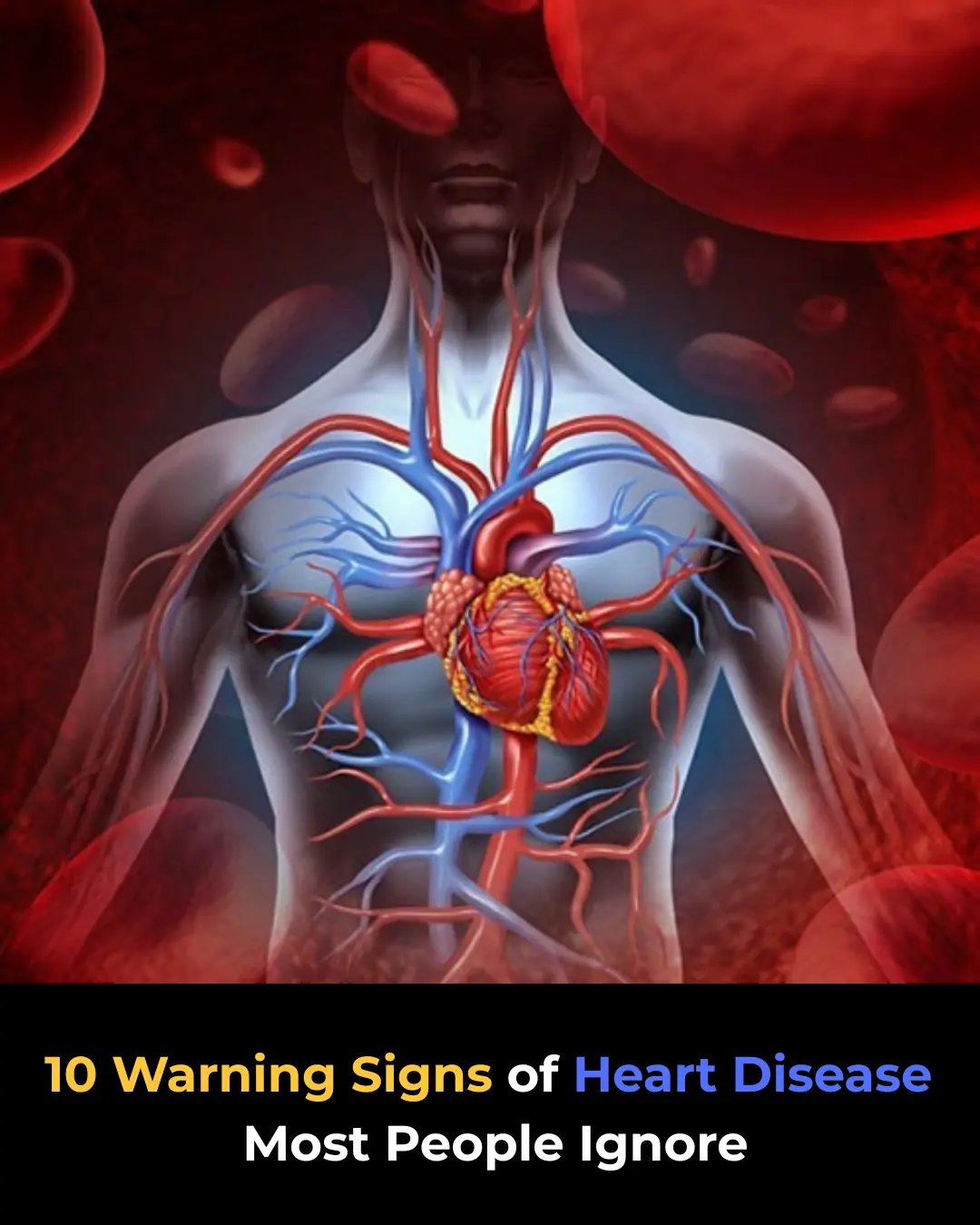
10 Warning Signs of Heart Disease Most People Ignore
Health 06/12/2025 16:03
Scientific warnings about smoking have entered a new phase as researchers reveal that even very small daily habits—far below what most people consider dangerous—can cause meaningful and lasting harm. For years, many believed that only heavy or long-term smokers carried the greatest health risks. However, emerging evidence now challenges this assumption and shows that damage begins at extremely low levels of use. New findings highlight that the body reacts to tobacco exposure immediately, and these effects accumulate far earlier than expected.
Smoking has long been recognized as a major threat to public health. Images of diseased lungs, warnings on cigarette packaging, and decades of anti-smoking campaigns have made the general public aware of the dangers. Yet a common misconception persists: the belief that smoking one or two cigarettes a day is harmless or at least “not as bad.” Some people even associate very light smoking with stress relief or social bonding. The newest research directly disproves these assumptions, demonstrating that the biological damage triggered by tobacco smoke begins with the very first inhalation. According to the World Health Organization (WHO), more than 7 million people die each year from direct tobacco use, and there is no safe level of exposure, even for occasional smokers (WHO Tobacco Fact Sheet, 2024).
The new study that has fueled widespread discussion comes from Johns Hopkins University, one of the world’s most respected medical research centers. Researchers monitored more than 300,000 adults over nearly two decades, which allowed them to identify long-term patterns and consequences that smaller or shorter studies would not have detected. Their findings add powerful new evidence to what organizations like the Centers for Disease Control and Prevention (CDC) and the American Heart Association (AHA) have long warned: even low-level smoking substantially increases the risk of disease and premature death.
The data from the study are both startling and deeply concerning. Individuals who smoked only two cigarettes per day experienced a 60% higher risk of death from any cause compared to people who never smoked. This number is far higher than many people would expect for such a small habit. A 60% increase in overall mortality represents a severe threat, especially considering how socially accepted “light smoking” often is. Similarly, the risk of developing heart disease—one of the world’s leading causes of death—was shown to be 50% higher among people who smoked at this low level. The American Heart Association notes that tobacco smoke rapidly damages the endothelial lining of blood vessels, even with minimal exposure, which accelerates plaque buildup and increases the likelihood of heart attacks and strokes (AHA Scientific Statement, 2023).
These results were published in PLOS Medicine on November 18 and have since gained attention from medical experts and public health organizations. Their message is clear and consistent: there is no safe level of smoking. Every cigarette introduces toxic chemicals, and even the smallest daily habit causes measurable harm. The CDC similarly states that “light or intermittent smoking still causes serious health risks,” emphasizing that occasional smokers face higher risks of cardiovascular disease, lung cancer, and reduced lung function (CDC Tobacco Information, 2024).
Cardiologist Dr. Jennifer Miao from Yale University explained the study’s findings in accessible terms. She emphasized that tobacco damages blood vessels rapidly, creating microscopic injuries that make arterial plaque more likely to form. Over time, this plaque can thicken, harden, and obstruct blood flow—paving the way for heart attacks. These changes occur regardless of whether someone smokes two cigarettes a day or twenty. The body does not differentiate between “light” and “heavy” smoking when it comes to the initial stages of damage.
Dr. Miao further explained that once plaque begins to form, it rarely stops progressing unless a person makes significant lifestyle changes, particularly quitting smoking. These early changes often remain invisible for years. People may feel healthy and symptom-free, which reinforces the illusion that occasional smoking is harmless. But internally, the damage is ongoing, cumulative, and dangerous.
On a hopeful note, the study’s authors stress that quitting smoking brings immediate benefits. Even though light smoking creates significant risks, the body begins repairing itself almost as soon as tobacco exposure stops. Dr. Erfan Tasdighi of Rutgers New Jersey Medical School highlighted that cardiovascular and respiratory improvements can be measured soon after quitting. According to the National Cancer Institute (NCI), within 20 minutes of stopping smoking, blood pressure and pulse begin to normalize, and within weeks, lung function improves noticeably (NCI Smoking Cessation Report, 2024). This means it is never too late to quit—every smoke-free day makes a positive difference.
However, Dr. Tasdighi also reinforced the core conclusion: even fewer than one cigarette per day increases the risk of cardiovascular disease. This finding aligns with multiple long-term studies published by the CDC and WHO, all of which state that “light smoking is not safe.” These risks are not minor—they are clinically significant and measurable.
Understanding the underlying science makes these risks clearer. Cigarette smoke contains more than 7,000 chemicals, according to the CDC. Hundreds of these chemicals are toxic, and at least 70 are known carcinogens. When inhaled, these chemicals enter the lungs instantly and then the bloodstream, where they begin fueling inflammation and oxidative stress. Chronic inflammation contributes to diseases such as lung cancer, heart disease, stroke, and blood clot formation. Even one cigarette can trigger measurable levels of inflammation that the body cannot fully repair before the next exposure.
The effects of smoking are not limited to one organ. The toxins impact the lungs, heart, immune system, blood vessels, and nearly every tissue in the body. The U.S. Surgeon General notes that even brief exposure to smoke causes blood to become stickier and more prone to clotting, increases heart workload, and reduces oxygen transport—all of which raise the risk of sudden health events. These reactions occur regardless of smoking frequency.
This research is particularly relevant for people who consider themselves “social smokers” or “occasional smokers.” Someone who smokes only during stressful moments or social gatherings may assume their risk is low. Yet the study demonstrates that the body responds to each cigarette, no matter how infrequent, with harmful biological changes. The idea that the body “recovers” between cigarettes is inaccurate; the damage does not fully reverse, and it builds quietly over time.
One of the most striking findings from the Johns Hopkins research is that the increased risks apply to all-cause mortality, meaning the overall burden of harm spans multiple body systems. Smoking worsens underlying conditions and weakens the body’s defenses. This universal impact helps explain why even light smokers have significantly shorter life expectancies than non-smokers.
Another powerful aspect of the study is that the findings held true across a diverse population. Men and women, younger adults and older adults, people with different lifestyles—all showed increased risks when exposed to low levels of daily smoking. This consistency strengthens the conclusion that the danger is widespread and not limited to specific groups.
Many people underestimate smoking risks because immediate symptoms are rare. Smoking often produces a sense of calm or routine for the user, masking the internal harm taking place. But as the researchers emphasize, the early stages of damage are silent. By the time symptoms finally appear, significant and sometimes irreversible damage may have already accumulated.
The purpose of the study is not to scare people but to provide clarity. With accurate information, individuals can make more informed decisions about their health. The research encourages people to rethink old assumptions about light smoking and recognize the real biological consequences. Knowledge empowers people to take action early—before the risks grow larger.
The positive message within these findings is that quitting—even after years of low-level smoking—offers rapid and meaningful improvements. Blood pressure stabilizes, lung capacity increases, circulation improves, and long-term disease risks begin to decline. The longer someone stays smoke-free, the greater the health benefits they gain.
Ultimately, the Johns Hopkins study delivers a simple but important message: even very low levels of smoking are dangerous. Every cigarette contributes to long-term harm, and there is no safe threshold. However, the body is resilient and begins healing quickly once smoking stops. These findings offer both a clear warning and a hopeful path forward: while small habits create real consequences, positive change is always possible, and recovery begins right away.