10 Warning Signs of Heart Disease Most People Ignore
Health 06/12/2025 16:03
Losartan is one of the most widely prescribed medications for high blood pressure and kidney protection, especially in adults with type 2 diabetes. Belonging to the drug class known as Angiotensin II Receptor Blockers (ARBs), Losartan works by relaxing blood vessels, lowering blood pressure, and reducing strain on the heart. It is also routinely used after heart attacks and in patients with heart failure.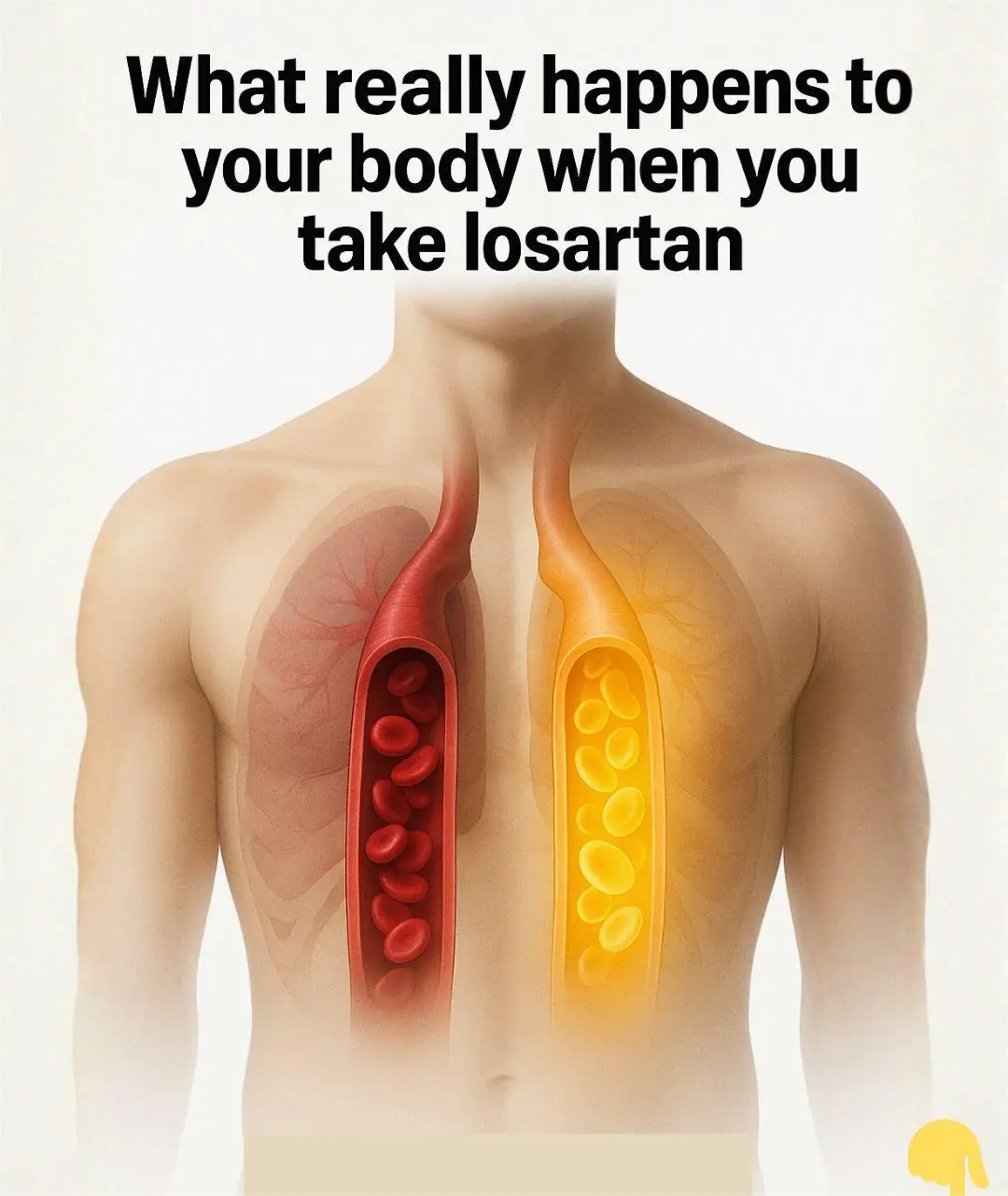
Your body naturally produces a hormone called angiotensin II, which tightens blood vessels and increases blood pressure. Losartan blocks the receptors that angiotensin II attaches to, preventing this narrowing effect.
The result is:
Wider, more relaxed blood vessels
Lower blood pressure
Easier circulation
Reduced workload on the heart
Because of these benefits, doctors often prescribe Losartan for long-term cardiovascular and kidney protection.
It is an ARB used to treat high blood pressure and protect kidney function in type 2 diabetes.
It helps keep blood vessels open by blocking angiotensin II.
It is also used after heart attacks and for some cases of heart failure.
It is typically taken once daily, with or without food.
Do not stop taking Losartan unless instructed by your doctor.
If you miss a dose, take it when you remember—never double your dose.
It is generally safe for long-term use with routine medical follow-ups.
Unlike ACE inhibitors (e.g., enalapril), Losartan is less likely to cause a persistent dry cough.
Always inform anesthesiologists that you take Losartan before surgery.
Not a first-line treatment for Raynaud’s, but sometimes used in select cases.
No strong evidence supports Alzheimer’s prevention, though it may help small-vessel issues in the brain.
It does not interfere with birth control unless vomiting or diarrhea affects absorption.
Avoid alcohol when starting the medication or increasing the dose.
Lifestyle changes—healthy diet, exercise, reduced alcohol, quitting smoking—are essential parts of treatment.
Patients with kidney issues should monitor potassium intake.
Common side effects: dizziness, fatigue, headache.
Losartan is not addictive and does not cause cancer.
Contraindications include pregnancy (especially 2nd/3rd trimester), severe liver failure, and renal artery stenosis.
It may interact with NSAIDs, potassium-sparing diuretics, lithium, ACE inhibitors, and certain herbs.
Most people take Losartan once a day, preferably at the same time each day. Some individuals begin by taking it at night to avoid dizziness during the daytime.
Because high blood pressure usually has no symptoms, you may not “feel” the medication working—but it is protecting your heart, blood vessels, and kidneys. Stopping it suddenly can cause blood pressure to rise again.
Take it as soon as you remember.
If it’s close to your next dose, skip the missed dose.
Never take two doses at once.
Losartan begins lowering blood pressure within the first hour, but the full therapeutic effect takes 3–6 weeks. This is why doctors wait several weeks before adjusting your dosage.
Both ARBs and ACE inhibitors target the renin–angiotensin system, but they act at different stages.
ACE inhibitors reduce the production of angiotensin II but often cause a dry cough in some patients.
Losartan avoids this side effect, making it a preferred alternative for many.
Always tell your surgeon and anesthesiologist about all medications you take.
Losartan is often stopped 24 hours before surgery to reduce the risk of excessive blood pressure drops under anesthesia.
Not typically a first-line treatment, but may be used when standard options fail.
Research is ongoing. While ARBs may improve blood flow in small brain vessels, evidence remains inconclusive.
Losartan does not reduce the effectiveness of contraception. Only severe vomiting or diarrhea might affect absorption of oral forms.
May intensify dizziness or low blood pressure, especially at the beginning of treatment.
Medication is only one part of blood pressure management.
Doctors also recommend:
✅ Quitting smoking
✅ Reducing alcohol consumption
✅ Eating a low-salt, heart-healthy diet
✅ Exercising regularly
✅ Managing stress
These steps significantly improve long-term outcomes.
Losartan can increase potassium levels. If you have kidney disease or take potassium-raising drugs, be cautious with:
Bananas
Avocados
Tomatoes
Potatoes
Beans
Always ask your doctor if potassium restrictions apply to you.
Most side effects are mild and improve over time:
Dizziness
Headache
Fatigue
Nausea
Rare but serious effects:
High potassium levels
Kidney function changes
Allergic reactions (facial swelling, rash)
Seek immediate care for signs of a severe reaction.
No—Losartan is not habit-forming.
Concerns about nitrosamine contamination were linked to manufacturing issues, not the drug itself. Recalled batches were removed from the market.
Losartan is contraindicated for:
❌ Pregnancy (especially after 13 weeks)
❌ Allergy to Losartan
❌ Bilateral renal artery stenosis
❌ Severe liver failure
❌ Elevated potassium (hyperkalemia)
❌ Children under 6 years
Always discuss your medical history with your clinician.
NSAIDs (ibuprofen, naproxen)
Potassium-sparing diuretics (spironolactone, amiloride)
Potassium supplements
Lithium (risk of toxicity)
ACE inhibitors
Other antihypertensives
St. John’s Wort (may reduce effect)
Licorice (may raise blood pressure)
Garlic (large amounts may enhance Losartan’s effect)
Ginkgo biloba (mixed evidence; caution advised)
Always tell your doctor about supplements you use.
Losartan is a well-studied, widely used, and generally safe medication for lowering blood pressure and protecting the heart and kidneys. With proper medical supervision, regular monitoring, and healthy lifestyle habits, most patients tolerate Losartan very well and benefit from long-term use.
If you ever experience side effects or want to adjust your dose, speak with your healthcare provider—never make changes on your own.